

Living on Bowen Island:
A Guide to Real Estate, Bylaws, and Municipal Rules
While the allure of living on Bowen Island is often found in its sun-drenched orchards and vibrant artisan culture, navigating the unique municipal landscape is a critical reality for any prospective resident. Unlike many other Gulf Islands governed by the Islands Trust, Bowen Island (BIM) is a self-governing municipality. This means it has independent authority over Bowen Island building permits, local property taxes, and specific land-use bylaws that differ from the mainland.
Whether you are eyeing a Bowen Island waterfront property, searching for vacant land for sale, or asking, “Can I build a secondary suite on Bowen Island?”, understanding the local “rules of the island” is essential. From navigating zoning amendments and setback requirements to understanding how Bowen Island property taxes fund local infrastructure, being informed is the first step for any serious investor or resident.
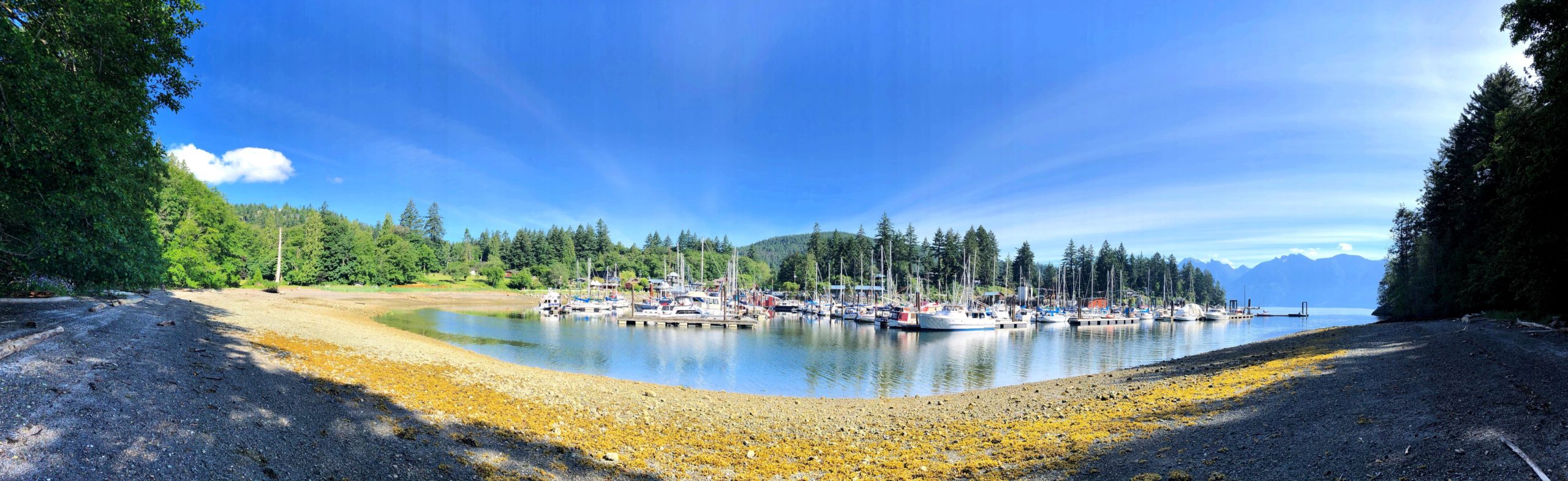
1. The Bowen Island Municipality (BIM) & BowMap: Navigating Local Governance
Established in 1999, the Bowen Island Municipality (BIM) is a unique self-governing body within the Islands Trust. While most neighbouring islands fall under direct Trust control, Bowen holds the legislative power of a traditional municipality while remaining dedicated to the province’s mission to “preserve and protect” the island’s environment.
For those looking at Bowen Island real estate, this structure means that the local council—your neighbours—has final authority over critical property issues. Whether you are asking, “What are the current Bowen Island property tax rates?” or “Who issues building permits on Bowen Island?”, the answer lies with the municipality. Understanding the Bowen Island Official Community Plan (OCP) is vital for any investor or resident, as it dictates future land use planning, road maintenance, and community growth strategies.
Researching Property Data with BowMap
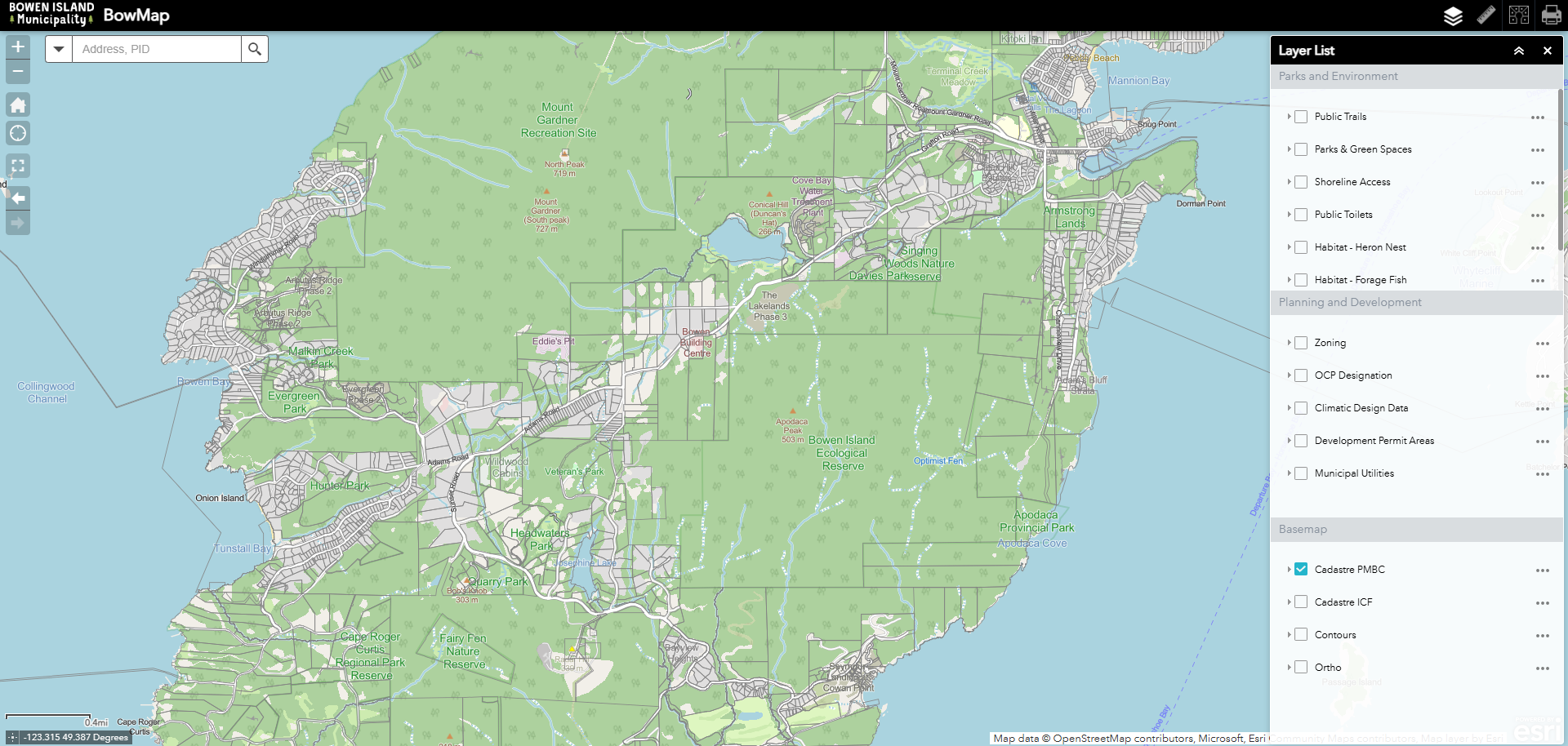
Before purchasing land for sale on Bowen Island, your first step should be BowMap, the municipality’s interactive GIS mapping tool. This is the “gold standard” for due diligence, providing essential data for buyers and builders.
By using BowMap, you can answer common search queries like:
- Where are my property lines? While only a BC Land Surveyor can legally identify pins, BowMap shows property boundaries and dimensions,
which is essential for determining setbacks for new builds or fences.
- What is the zoning for this property? You can verify land use zones to see if a lot allows for secondary suites,
tiny homes, or Short-Term Rentals (STR). Knowing the specific zoning bylaw is the only way to confirm permitted uses,
height restrictions, and lot coverage.
- Is my lot in a Development Permit Area (DPA)? BowMap identifies protected zones such as Watershed and Stream DPAs. Construction in these
areas often requires a Development Permit to protect local ecosystems, even if a building permit isn’t strictly required for the work.
- Are there environmental covenants or archaeological sites? Many properties have covenants to protect the island’s Dark Sky status or preserve fragile watersheds. You can also use the tool to check for proximity to parks, trails, and public beaches.
2. Bowen Island Property Taxes, Utilities, and Water Districts
Understanding the financial obligations of property ownership on the island is essential for budgeting. Because Bowen Island Municipality (BIM) is self-governing, your property tax bill and utility fees are managed locally, covering everything from the RCMP contract to the maintenance of our unique “rural-style” roads.
Bowen Island Property Taxes & The Speculation Tax
A common question for off-island investors is, “Does the Speculation and Vacancy Tax apply to Bowen Island?”
- Speculation Tax: As of 2024, Bowen Island is included in the BC Speculation and Vacancy Tax geographic area. Owners who do not live
in their home as a principal residence or rent it out for at least six months a year may be subject to this tax.
- Tax Cycles: Property tax notices are typically mailed in late May and are due in early July. You can check your specific Bowen Island property tax assessment through
the BC Assessment website.
- Home Owner Grant: Residents who use their Bowen property as their principal residence are eligible for the BC Home Owner Grant, which can significantly reduce the annual tax burden.
The Bowen Island Water System: Districts vs. Private Wells
Water is the most critical utility to research before buying real estate on Bowen Island. Unlike the mainland, there is no single island-wide water system.
- Municipal Water Districts: There are seven distinct municipal water systems (including Cove Bay, Snug Cove, and Tunstall Bay). If
your home is within a district, you will pay an annual Water User Fee and potentially a parcel tax for infrastructure upgrades.
- Private Wells: Many properties—especially those in more rural or “off-grid” areas—rely entirely on private artesian wells. If you are
looking at land for sale on Bowen Island, a “well productivity test” and potability glass-bottle test are essential during your due diligence period.
- Water Conservation: During summer months, the municipality enforces strict Water Conservation Stages (Stages 1 through 4) to protect the aquifer.
Waste Management and the “Knuckle”
How do you get rid of trash on an island?
- Curbside Pickup: Most residential areas receive weekly or bi-weekly curbside garbage and recycling collection.
- The Bowen Island Recycling Depot (BIRD): For items that don’t fit in the bin, residents head to “The BIRD” (located at the Knuckle). It is a hub for recycling everything from electronics
to glass and compost.
- Waste Tolls: Be aware that certain materials incur “tipping fees” to cover the cost of barging waste off the island to the mainland.
Road Maintenance and Culverts
On Bowen, “infrastructure” often starts at your driveway.
- Culvert Maintenance: Property owners are responsible for the maintenance of the culvert under their driveway. If a blocked culvert
causes road flooding, the municipality may require the owner to clear or replace it.
- Sewer vs. Septic: Only the Snug Cove area is served by a municipal sewer system. The vast majority of Bowen Island homes utilize private septic systems, which require regular pumping (usually every 3–5 years) and inspections.
3. The Bowen Island Building Permit & Inspection Process
Navigating the Bowen Island Building Department is a critical step for anyone planning a renovation, addition, or new build. Because the island is a self-governing municipality, all building permits, plumbing permits, and occupancy permits are issued locally at Municipal Hall, rather than through a regional district.
How do I get a building permit on Bowen Island?
The process begins with ensuring your project aligns with the Bowen Island Land Use Bylaw. Key search terms and requirements you need to know include:
- Building Permit Application Fees: Fees are based on the value of construction, and you may be required to pay Development Cost Charges (DCCs) for
new density.
- BC Building Code Compliance: All structures must meet current BC Building Code standards, including specific Step Code requirements
for energy efficiency.
- Mandatory Inspections: From the “footing and form” stage to the final occupancy permit, the municipal building inspector must sign off
on various stages of construction.
- Professional Reports: For complex lots, the municipality may require a Schedule B from a professional engineer or architect.
Septic Systems & Private Wastewater Management
Since only the Snug Cove area is serviced by a municipal sewer, approximately 90% of Bowen Island real estate relies on private onsite wastewater treatment systems. What are the rules for septic systems on Bowen Island?
If you are buying a home or vacant land for sale, you must understand the provincial and municipal regulations:
- Registered Onsite Wastewater Practitioner (ROWP): Any installation or significant repair must be performed by a certified ROWP or a professional engineer.
- Type 1, 2, and 3 Systems: Depending on your soil conditions and lot size, you may require a standard Type 1 septic system (gravity
fed) or a more advanced Type 3 system (treatment plant) for environmentally sensitive areas.
- Maintenance & Inspections: To protect the island’s groundwater and aquifers, regular pumping and maintenance are essential. When selling a home, a “Septic Inspection Report” is a standard request from buyers to ensure the field is not in failure.
Building in Riparian Areas & Steep Slope DPAs
Bowen Island’s rugged geography means many properties fall within Development Permit Areas (DPAs). If your property is near a stream, lake, or cliffside, you are subject to the Riparian Areas Protection Regulation (RAPR).
Can I build near a stream or on a cliff?
Before applying for a building permit, you may need a Development Permit if your land has:
- Riparian Setbacks: Construction is strictly limited within 30 metres of a watercourse to protect fish habitats and water quality.
- Steep Slope Hazards: If your lot has a grade of 25% or more, a geotechnical report from a professional engineer is required to ensure
the land is safe for building and won’t impact neighbouring properties.
- Wildfire Mitigation: Many DPAs now require FireSmart landscaping and building materials to reduce the risk of wildfire spread in forested areas.
Driveway Access & Culvert Maintenance Bylaws
One often-overlooked “rule of the island” is that the property owner is responsible for the connection between their land and the municipal road.
Do I need a permit for a new driveway?
- Driveway Access Permit: Before cutting a curb or installing a new entrance, you must obtain a permit from the BIM Public Works Department.
They ensure the entrance has proper sightlines for safety.
- Culvert Responsibility: On Bowen, owners are responsible for the culvert running under their driveway. If a blocked or collapsed culvert causes road flooding or erosion, the municipality requires the homeowner to repair or replace it to protect local drainage infrastructure.
Easements, Rights-of-Way, and Statutory Covenants
When purchasing real estate on Bowen Island, reviewing the Land Title is just as important as walking the property. Many island lots are encumbered by easements or covenants that can significantly restrict where you build or how you use your land.
What are common easements on Bowen Island?
Because of our rugged terrain and history of subdivision, you will frequently encounter:
- Utility Easements: These allow companies like BC Hydro or Telus (and sometimes
the Municipality for water lines) to access and maintain infrastructure on your private property. Building a permanent structure (like a garage or shed) over these areas is strictly prohibited.
- Access Easements (Shared Driveways): Many “panhandle” or “back-lot” properties on Bowen rely on a registered easement over a neighbour’s
land for driveway access. Understanding who is responsible for shared driveway maintenance and snow removal is a frequent source of “neighbourly” discussion.
- Statutory Rights-of-Way (SRW): These are often held by the Bowen Island Municipality for public infrastructure, such as drainage
culverts, water mains, or even community trail connections that cross private land.
- Conservation Covenants: To satisfy the Islands Trust mandate, some properties have “no-disturb” covenants registered on title. These areas must remain in their natural state to protect wildlife corridors, old-growth trees, or sensitive watersheds.
Why a Title Search is non-negotiable:
Before removing subjects on a Bowen Island property for sale, your realtor or lawyer must pull the State of Title Certificate. This document reveals if a “view easement” exists (preventing your neighbour from planting tall trees) or if there are restrictive covenants that limit your lot coverage or building height beyond what the standard zoning bylaw allows.
4. Working from Home: Bowen Island Business License Requirements
With its quiet atmosphere and close proximity to Vancouver, Bowen Island is a hub for remote workers, consultants, and creative entrepreneurs. However, the Bowen Island Municipality has specific regulations regarding Home-Occupancy Businesses to ensure that residential neighbourhoods maintain their character.
Do I need a Bowen Island business license to work from home?
The requirement for a Bowen Island Business License depends on the nature of your work and whether your business has a “physical footprint” on the island.
- When a License is NOT Required: Generally, if you are a remote employee for an off-island company or a freelancer who works entirely online with no clients visiting your home and no
local signage, you typically do not require a municipal business license.
- When a License IS Required: Under Business Licencing Bylaw No. 465, you must apply for a license if you:
- Maintain a physical office or studio where clients or employees visit.
- Provide local services (e.g., landscaping, therapy, tutoring, or artisan crafts).
- Store commercial equipment or inventory on your property.
- Advertise your home address as a place of business.
Bowen Island Home-Occupancy Regulations
To protect the “quiet enjoyment” of your neighbours, all home-based businesses must adhere to Land Use Bylaw restrictions, which typically include:
- Traffic & Parking: Your business cannot generate excessive vehicle traffic or require more parking than a standard residence provides.
- Signage: There are strict limits on the size and type of home-based business signs allowed in residential zones.
- Noise & Odour: Your business must not produce noise, vibration, smoke, or odours detectable beyond your property line.
- Employee Limits: Most residential zones limit the number of non-resident employees who can work on-site (usually capped at one).
Common Questions About Island Living & Micro-Businesses
Bowen Island has a history of self-sufficiency and commerce. Municipal rules should be kept in mind for hobbyists and young entrepreneurs.
1. Can I have a hobby farm on Bowen Island without a license?
You can have a hobby farm on Bowen Island without a business license. This is permitted if you are in a zone that allows for agriculture.
- Most residential lots allow for keeping poultry (chickens) and bees for personal use.
- If you sell your produce or livestock commercially as a primary source of income, or if you require large-scale infrastructure, you should consult the Bowen Island Land Use Bylaw regarding setbacks for manure storage and animal enclosures. No specific “farm license” is required for casual hobby farming.
2. Can I have a “Community Box” or Farm Stand to sell jams and eggs?
The “Honesty Box” or roadside farm stand is common on Bowen Island.
- You do not need a business license to sell home-grown produce, eggs, or preserves from a small stand on your property.
- To keep things legal, your stand must be on your private property and should not obstruct traffic or sightlines for drivers.
- If you are selling high-risk “prepared foods,” you are still subject to Vancouver Coastal Health regulations.
3. Can my kids have a lemonade stand on Bowen?
Yes, the municipality does not require a business license or permit for a child’s lemonade stand.
- Bowen is a supportive environment for young entrepreneurs.
- Ensure the stand is set up safely away from the flow of traffic, especially in busy areas to keep both the “business owners” and their customers safe.
5. Bowen Island Short-Term Rental (STR) & Secondary Suite Regulations
The housing landscape on Bowen is shifting rapidly. To address the local housing crisis, the Bowen Island Municipality (BIM) has implemented strict regulations to balance the needs of tourism with the necessity of long-term rentals on Bowen Island. Whether you are an investor or a homeowner, staying compliant with these evolving bylaws is critical.
Bowen Island Short-Term Rental (STR) Bylaws & Licensing
If you are planning to operate an Airbnb on Bowen Island or a VRBO vacation rental, you must navigate the municipality’s Short-Term Rental (STR) licensing framework. Unlike some mainland jurisdictions, Bowen Island has specific “Rules of the Island” designed to protect the residential character of neighbourhoods.
- The Principal Residence Requirement: Under current Bowen Island STR regulations, most zones require the operator to be a
full-time resident on the property. This means you generally cannot operate a stand-alone investment property as a short-term rental; you must live on-site in either the main house or the suite.
- Business License Mandatory: To operate legally, you must apply for a BIM Short-Term Rental Business License. This requires proof of residency,
a floor plan, and a designated “Local Contact” available 24/7 to handle guest issues. BIM Business Licensing: To run an Airbnb on Bowen Island or
a VRBO, you must hold a valid BIM Short-Term Rental Business License. Failure to display a valid license number on your listing can
result in significant municipal fines and platform removal under provincial enforcement rules.
- STR Zoning Restrictions: Not all lots are created equal. You must check BowMap to see if your specific zone allows for “Guest House” or “Bed and Breakfast” use, as some areas have stricter caps on the number of guests or nights allowed per year.
Navigating Provincial and Municipal STR Laws
A critical “Rule of the Island” that every investor must understand is the intersection of BC Provincial STR Legislation and local Bowen Island Municipality (BIM) bylaws.
- The 90-Day vs. 28-Day Rule: This is a major point of confusion for searchers. While the British Columbia Government defines a Short-Term
Rental as any stay of less than 90 consecutive days, the Bowen Island Municipality defines an STR as any stay of
less than 28 days.
- Compliance: To operate legally, you must satisfy both sets of rules. While the province sets the baseline for the Principal Residence Requirement across BC, Bowen’s specific Land Use Bylaw and business licensing requirements dictate the day-to-day operations on the island.
Building Legal Secondary Suites & Coach Houses
Building a legal suite is one of the most effective ways to increase Bowen Island real estate value while providing much-needed housing for the community. However, there is a big difference between a “mortgage helper” and a municipally sanctioned legal suite.
- Secondary Suite Requirements: A legal suite must meet specific BC Building Code standards for fire separation, ceiling height, and
independent heating/ventilation. Additionally, the BIM Building Department requires one dedicated off-street parking stall for the suite in addition to the requirements for the
main house.
- Detached Secondary Suites (Coach Houses): On many larger lots, the municipality allows for detached suites (garden suites or coach
houses). These are subject to “Lot Coverage” limits and specific setback requirements from property lines and septic fields.
- Water & Sewer Capacity: If your property is in a municipal water district, you may need to pay additional “connection fees” or prove that your private septic system is rated to handle the extra bedrooms and wastewater load of a secondary suite.
6. Essential Bowen Island Bylaws: A Guide for Property Owners and Residents
Navigating the “rules of the island” is key to enjoying the unique lifestyle here. As a self-governing municipality, the Bowen Island Municipality (BIM) manages its own regulatory framework to balance community needs with environmental protection.
Bowen Island Pet and Dog Control Rules
One of the most frequent questions for newcomers is, “Is Bowen Island dog-friendly?” The answer is yes, but with specific responsible pet ownership guidelines:
- Do I need a dog license? Currently, Bowen Island does not require municipal dog licensing. However, all dogs must wear a tag with the
owner’s name and contact information.
- Leash Laws & Off-Leash Areas: Dogs must be on-leash in
Snug Cove, around Grafton Lake, and in
Crippen Regional Park. On most other municipal trails, dogs can be off-leash but must be under “effective control” (within 3 metres of the owner).
- Beach Restrictions: To protect summer visitors, dogs are prohibited from Bowen Bay, Tunstall Bay, and Sandy Beach during
July and August.
- Barking & Nuisance: The Dog Control Bylaw No. 30 prohibits incessant barking that disturbs the quiet of the neighbourhood.
Noise Bylaws and “Quiet Hours”
To maintain the island’s serenity, the Noise Control Bylaw No. 108 strictly regulates loud activities:
- What are the quiet hours? General construction and power equipment noise are restricted to:
- Weekdays: 7:00 AM – 8:00 PM.
- Weekends & Holidays: 9:00 AM – 6:00 PM.
- Exemptions: Residents can apply for a Noise Exemption Permit for special events through the Bylaw Services office.
Tree Removal and Land Clearing Regulations
Many property owners wonder, “Do I need a permit to cut down a tree on Bowen Island?”
- Tree Bylaw: Bowen Island does not have a general tree removal bylaw for private land.
- Development Permit Areas (DPAs): You must check
BowMap to see if your property is in a DPA (e.g., Watershed or Riparian zones). If so, a Development Permit is required before removing any vegetation or trees.
- Site Alteration: As of 2023, a Site Alteration Permit is required for major land clearing or soil deposit/removal above certain thresholds.
Outdoor Burning and Fire Safety
Fire safety is paramount in our forested community.
- Open Burning Season: Major burn piles (Category 2 & 3) are only permitted from October 15 to April 15.
- Permits Required: You must obtain a municipal Burn Permit AND register with Metro Vancouver before
lighting a burn pile.
- Campfires: Small recreational fires (0.5m x 0.5m) are generally allowed without a permit, provided the Fire Danger Rating is Low or Moderate. All beach fires are prohibited year-round at Mannion Bay/Sandy Beach.
7. The Ultimate Bowen Island Relocation & Move-In Checklist
Moving to an island involves more logistical coordination than a standard mainland move. Whether you are relocating from Vancouver or out of province, navigating the Horseshoe Bay ferry terminal with a moving truck requires a specific strategy. Use this optimized checklist to ensure a seamless transition into the Bowen Island community.
Phase 1 Checklist of your Bowen Island Move:
The Pre-Move & Logistics Phase
Before the moving truck arrives at the BC Ferries terminal, you must address these island-specific logistics to avoid costly delays.
- Master the BC Ferries Schedule: Download the BC Ferries app and set up alerts for the Route 8 (Horseshoe Bay to Snug Cove) crossing.
- Calculate Moving Truck Costs: BC Ferries charges commercial vehicles by length. A 20-foot truck costs significantly more than a standard SUV. Pro Tip: Measure
your total length (including the ramp/hitch) to avoid surprises at the ticket booth.
- Book a Commercial Ferry Reservation: Unlike passenger vehicles, large moving companies can sometimes book commercial ferry slots. Do
not leave your moving day to chance; call the BC Ferries commercial desk at least two weeks in advance.
- Apply for the BC Ferries Experience Card: To access the Bowen Island resident ferry discount, you need an Experience Card. Ensure your
account is loaded and your address is updated to reflect your new residency.
- Septic System Due Diligence: If your new home is not on the Snug Cove sewer system, ensure the septic tank has
been pumped and inspected by a Registered Onsite Wastewater Practitioner (ROWP). A failing septic field is a major capital expense you want to identify before moving in.
- Verify Water District Status: Confirm if your home is in a municipal water district (like Blue Water or Eagle Cliff) or relies on a private well. If it’s a well, locate the pump house and test the filtration system.
Phase 2 Checklist of your Move to Bowen Island:
The Integration & “Rules of the Island” Phase
Once you’ve landed in Snug Cove, the first 30 days are about integrating into the local ecosystem and following Bowen Island bylaws.
- Join the “Digital Town Square”: The Bowen Island Everything Facebook group is the primary source for real-time community news, power
outage updates, and local recommendations.
- Animal-Aware Waste Management: Bowen is home to many different wildlife of all sizes. Learn the Animal-Aware way to handle organics
and trash. Secure your bins in a garage or animal-proof enclosure to prevent wildlife habituation.
- Find Your Nearest “Lift Stop”: Bowen has a unique, sanctioned hitchhiking system. Locate the “Lift Stop” signs in your neighbourhood—this
is a vital part of island transportation for teens and commuters alike.
- Register at the Bowen Island Health Centre: Our new community health centre is a hub for medical services. Visit in person to get
on the waitlist for a local family doctor or to learn about urgent care hours.
- Update Your Voter Registration: As a resident of a self-governing municipality, your vote in local elections directly impacts
Bowen Island property taxes and land-use bylaws.
- Locate Your Water Shut-Off & Culverts: In the event of a freeze or heavy rain, you need to know where your main water shut-off is and ensure your driveway culvert is clear of debris to prevent flooding.
8. Bowen Island Essential Services: The “Who to Call” Directory
Setting up utilities is the first step when moving. Bowen Island is a self-governing municipality. This means services are provided by both provincial providers and local departments.
Who provides electricity and internet on Bowen Island?
- BC Hydro (Power): Visit the BC Hydro website to transfer service. Sign up for “Outage Alerts.” Island storms can cause power interruptions. The map is accurate for Snug Cove and beyond.
- Telus & Shaw/Rogers (Internet & TV): Most of the island has high-speed fiber or cable. Check your address for fiber optic availability. Some rural areas may rely on satellite
or point-to-point wireless.
-
Bowen Island Municipality (Water & Sewer): If you are in a municipal water district, contact the BIM Finance Department to set up utility billing.
- First Transit (Buses): Bowen is served by TransLink (Route 280, 281, 282). Use a Compass Card here.
Emergency & Municipal Contacts:
- RCMP (Non-Emergency): 604-947-0516 (Located in Snug Cove).
- Bowen Island Fire & Rescue: For burn permits and fire safety info, visit the Fire Hall website.
- Bylaw Enforcement: For questions about noise, parking, or short-term rentals, contact BIM Bylaw Services.
9. Your First Weekend on Bowen: The New Resident’s Itinerary
After boxes are unpacked, it’s time to explore. This itinerary highlights essential spots every local knows.
What should I do my first weekend living on Bowen Island?
- Saturday Morning: The Snug Cove Shuffle. Start at
Artisan Square for coffee and pastries. It is a good place to meet neighbors and browse galleries.
- Saturday Afternoon: The Killarney Lake Loop. Head to
Crippen Regional Park for a 4km hike around the lake. It is a walk for all new residents.
- Sunday Morning: The
Bowen Island Tailgate & Farmers’ Market. Visit the
Bowen Island Farmers’ Market at the BICS school gym. Buy local honey, eggs, and island-grown greens.
- Sunday Evening: Sunset at Tunstall Bay. Drive to the west side of the island to watch the sunset over the Pasley Island group.

10. The Bowen Island Pet Owner’s Move-In Guide
Bowen is dog-friendly. There are “Rules of the Island” for pet owners to ensure wildlife safety and community harmony.
Is there a vet on Bowen Island?
-
Bowen Island Veterinary Services: Located in Artisan Square, the local vet provides care for island pets. For after-hours emergencies, most residents go to the
24-hour hospitals in North Vancouver.
- Dog Licensing: Dog licenses are not required on Bowen, but dogs must wear a tag with your contact info at all times.
Where can I walk my dog off-leash on Bowen Island?
- Effective Control: On most municipal trails, dogs can be off-leash if they are under “effective control” (within 3 meters and responsive to commands).
- On-Leash Zones: Dogs must be leashed in the Snug Cove village, all Regional Parks (like Crippen), and around the Health Centre.
- Summer Beach Restrictions: Dogs are not allowed on Sandy Beach, Tunstall Bay, or Bowen Bay during July and August to accommodate summer crowds.
- Pet Food & Supplies: Find pet food and supplies at the Bowen Island Dog Ranch or local general stores in the Cove.
Bowen Island Property, Bylaw & Logistics FAQ:
The Definitive Guide for Residents and Investors
1. How are property taxes calculated on Bowen Island?
When calculating Bowen Island property taxes, the process begins with the BC Assessment notice you receive every January. Your tax bill is a “composite” rate, meaning it is the sum of several different levies. First is the Bowen Island Municipality (BIM) municipal rate, which funds local infrastructure, road maintenance, and parks. Added to this are the Islands Trust levy (supporting their “preserve and protect” mandate), the BC School Tax, and regional draws for the Metro Vancouver Regional District (MVRD) and hospital services.
- Pro Tip: If you disagree with your property valuation, you must appeal through the Property Assessment Review Panel (PARP) by the annual January deadline to potentially lower your future tax burden.
2. Does the BC Speculation and Vacancy Tax apply to Bowen Island?
Yes. As of January 2024, Bowen Island is included in the BC Speculation and Vacancy Tax geographic area. This provincial tax is designed to turn empty houses into homes for local residents. If the property is your principal residence, you are generally exempt, but you must still complete the annual declaration. For secondary homes or investment properties that are left vacant for more than six months of the year, owners may be subject to a tax of 0.5% (for Canadians) or 2% (for foreign owners) of the assessed value. This is a critical factor for anyone looking at Bowen Island real estate investment.
3. How do I apply for a building permit on Bowen Island?
The Bowen Island building permit application process is managed entirely by the BIM Building Department. You must submit your plans via the municipal online portal or in person at Municipal Hall in Artisan Square. The requirements include a comprehensive site plan, architectural drawings, and a Title Search (less than 30 days old). Depending on your lot, you may also need a Schedule B from a professional engineer. The municipality checks for compliance with the BC Building Code and the local Land Use Bylaw (LUB).
- Keywords: permit fees, occupancy permit, plumbing permit, building inspection schedule.
4. What is the difference between a secondary suite and a coach house on Bowen?
In the world of Bowen Island zoning, “Accessory Residential Use” falls into two categories. A Secondary Suite is a self-contained dwelling unit located within the main house (like a basement apartment). A Coach House (also known as a Garden Suite or Detached Accessory Dwelling Unit) is a separate building on the same lot. Both require a building permit and must meet BC Building Code fire and safety standards. On Bowen, you are generally allowed one or the other, but rarely both on a single residential lot, and they must provide an additional off-street parking stall.
5. Can I run an Airbnb or Short-Term Rental on Bowen Island?
To operate a Short-Term Rental (STR) or Airbnb on Bowen Island, you must comply with Bylaw No. 600. The most important “Rule of the Island” is the Principal Residence Requirement: you must be a permanent resident of the property to host guests for stays under 28 days. You are also required to obtain a BIM Business License and display the license number on all online listings. The municipality monitors platforms to ensure compliance with noise, parking, and guest-count regulations to protect the “quiet enjoyment” of residential neighbourhoods.
6. Do I need a permit to cut down trees on my property on Bowen Island?
Whether you need a tree removal permit depends on your property’s proximity to sensitive areas. While Bowen does not have a “blanket” tree bylaw for all private land, large portions of the island are designated as Development Permit Areas (DPAs). If your trees are within a Riparian Area (near a stream or lake), on a Steep Slope, or in a Watershed DPA, you are strictly prohibited from clearing vegetation or timber without a Development Permit. Cutting trees in these areas without approval can result in significant municipal fines and mandatory environmental restoration costs.
7. What are the rules for building a dock on Bowen Island?
Building a private dock or moorage on the Bowen Island foreshore is one of the most regulated construction projects. Because the water is provincial “Crown Land,” you must obtain a General Permission or Lease from the Province of BC in addition to a Development Permit from the Bowen Island Municipality. Your application will be scrutinized for its impact on eelgrass beds, fish habitats, and public access to the shoreline. Most waterfront owners must hire an Environmental Professional (QEP) to conduct a survey before any pilings are driven into the seabed.
8. How do I get the resident ferry discount on the Bowen Island ferry?
To access discounted ferry fares, residents must use the BC Ferries Experience Card. You load a minimum amount onto the card (tapered pricing) and tap it at the Horseshoe Bay or Snug Cove ticket booths. While the card is available to anyone, it is the only way to avoid paying the higher “drive-up” standard fare. Pro Tip for Newcomers: Ensure your card is registered online so you can protect your balance and set up “Auto-Reload,” as there are no ticket booths for vehicles leaving the island—you only pay for the trip to Bowen.
9. Is my Bowen Island home on municipal water or a private well?
This is a top search for Bowen Island due diligence. Approximately 1,200 properties are served by one of the seven Municipal Water Districts (such as Cove Bay, Snug Cove, or Tunstall Bay). You can verify this by checking BowMap or looking for a “Water User Fee” on your tax bill. If your property is not in a district, you are likely on a private artesian well or a community well system. Owners of well-reliant homes are responsible for their own water potability testing, pump maintenance, and UV/filtration systems to ensure safe drinking water.
10. What are the construction noise hours and bylaws on Bowen?
To maintain the island’s peaceful character, the Bowen Island Noise Control Bylaw strictly regulates when loud work can occur. Construction noise (including power saws, excavators, and hammering) is permitted only between 7:00 AM and 8:00 PM on weekdays, and 9:00 AM and 6:00 PM on Saturdays. Construction noise is prohibited on Sundays and Statutory Holidays. If you are a homeowner doing a “DIY” project, these same hours apply. For special circumstances, you can apply for a Noise Exemption Permit at Municipal Hall.
11. How do I maintain or inspect a septic system on Bowen Island?
Since 90% of Bowen Island homes rely on private wastewater treatment, maintaining your septic system is the most critical part of island homeownership. Under BC provincial health regulations, property owners are responsible for ensuring their system doesn’t fail or contaminate the groundwater. You should have your septic tank pumped every 3–5 years by a professional service.
- Registered Onsite Wastewater Practitioner (ROWP), septic field inspection, Type 1 vs Type 3 systems, effluent filter cleaning, VIHA regulations.
- Pro Tip: If you are selling your home, most buyers will require a septic inspection report from a certified ROWP to confirm the field is “functioning as intended.”
12. Do I need a business license for a home-based business on Bowen Island?
If you are asking, “Do I need a license to work from home on Bowen?”, the answer depends on your “business footprint.” Under Bylaw No. 465, a Home-Occupancy Business License is required if you have clients visiting your home, have employees on-site, or store commercial inventory. If you are a remote worker or digital nomad working entirely online with no local impact, a license is generally not required. However, all home businesses must adhere to Land Use Bylaw rules regarding noise, parking, and signage to ensure the residential character of the neighborhood is preserved.
13. What are the current fire bans and outdoor burning rules on Bowen Island?
Fire safety is a top priority in our forested community. From mid-April to mid-October, Bowen enters “Burning Season” restrictions. During the high-risk summer months (July–September), a total fire ban is typically enacted, prohibiting all campfires, fireworks, and outdoor burning. To light a Category 2 or 3 burn pile in the winter, you must obtain a BIM Burn Permit and check the Ventilation Index to ensure smoke won’t linger.
- Fire Danger Rating, FireSmart landscaping, backyard burning, venting index, wildfire mitigation.
14. Can I live in an RV, trailer, or tiny home on my property?
A common query is, “Is it legal to live in an RV on Bowen Island?” Generally, the Bowen Island Land Use Bylaw prohibits using a recreational vehicle (RV), trailer, or camper as a permanent or temporary residence on a private lot. While you can park an RV on your property for storage, it cannot be hooked up to services for habitation. Tiny homes are only permitted if they are built on a permanent foundation, meet the BC Building Code, and are sanctioned as a legal secondary suite or coach house.
15. How does the Bowen Island garbage and recycling pickup work?
The Bowen Island Municipality provides a bi-weekly rotating curbside collection service. One week is designated for organics (green bin) and recycling, while the following week is for garbage. All waste must be placed in wildlife-proof containers to prevent attracting black bears. For items that aren’t picked up at the curb—such as glass, electronics, or Styrofoam—residents must take them to the Bowen Island Recycling Depot (BIRD), locally known as “The BIRD,” located at the Knuckle.
16. What is a “Development Permit Area” (DPA) and how does it affect my lot?
Many buyers ask, “What is a DPA on a Bowen Island title search?” A DPA is a municipal designation that triggers extra oversight before any land alteration or construction can occur. Common DPAs on Bowen include Riparian (streamside) protection, Steep Slope (geotechnical) hazard zones, and Watershed protection areas. If your land falls within a DPA, you must apply for a Development Permit—which often requires reports from an Environmental Professional (QEP) or a Geotechnical Engineer—before a building permit will be issued.
17. Are there specific rules for fences and hedges on Bowen Island?
Yes, fence height regulations are dictated by your property’s zoning. In most residential zones, a fence in the front yard (within the front setback) cannot exceed 1.2 metres (4 feet) in height to maintain road visibility and aesthetics. Side and rear yard fences can typically go up to 1.8 metres (6 feet). Hedges are generally not restricted by height unless they create a safety hazard for traffic sightlines at intersections or driveways.
18. How do I get on a waitlist for a doctor at the Bowen Island Health Centre?
The Bowen Island Health Centre is the island’s primary medical hub. To find a
family doctor on Bowen Island, you should visit the Health Centre’s website to join the Primary Care Waitlist. While the centre provides nursing, lab work, and specialized
services, it is not an emergency room. In a medical emergency, residents call emergency services, and BC Ambulance coordinates transport via the ferry or a dedicated water taxi if
the ferry is not running.
19. Can I have chickens, bees, or livestock on my Bowen Island property?
Many residents want to know, “Can I have a hobby farm on Bowen Island?” Under the Land Use Bylaw, most residential zones allow for urban hens (poultry) and beekeeping for personal use. However, there are rules regarding the number of birds allowed based on lot size and the placement of coops relative to property lines. Larger livestock (horses, cows, goats) are typically only permitted in “Rural” or “Agricultural” zones with a minimum lot size of 0.4 hectares (1 acre) or larger.
20. What is the “Official Community Plan” (OCP) and why does it matter?
The Bowen Island OCP is the most important document for anyone interested in real estate development or long-term investment. It is the “master blueprint” that defines the island’s goals for density, environmental conservation, and transportation. Any major change to land use—such as subdividing property or rezoning—must align with the OCP. If a project requires an OCP Amendment, it involves significant public consultation and Council approval, making it a long and rigorous process.
21. How do I find my property lines and boundaries on Bowen Island?
If you are asking, “Where are my property pins?”, the most common starting point is BowMap, the island’s interactive GIS mapping system. While BowMap provides a visual approximation of lot dimensions and legal boundaries, it is not a legal document. For any construction project involving setbacks, fences, or retaining walls, you must hire a BC Land Surveyor (BCLS) to perform a legal survey. They will locate or replace the iron pins at the corners of your lot, which is a mandatory requirement for most building permit applications to ensure you aren’t encroaching on municipal road allowance or a neighbor’s land.
22. What is a “Variance” and how do I apply for a Development Variance Permit (DVP)?
A zoning variance is a request to “vary” a specific regulation in the Land Use Bylaw, such as a building’s height or its distance from a property line (setbacks). If your proposed build cannot meet the strict requirements of your zone due to the lot’s topography or shape, you must apply for a Development Variance Permit (DVP). This process involves a fee, notification of all neighbors within a specific radius, and a formal presentation to the Board of Variance or Municipal Council. A variance is only granted if it doesn’t significantly impact the character of the neighborhood or the environment.
23. Can I build a guest house or a “Tiny Home” on my property?
One of the most frequent searches is, “Is a tiny home legal on Bowen Island?” On Bowen, a “guest house” is officially classified as a Detached Secondary Suite (Coach House). To build one, your lot must be zoned to allow for it, and the building must be on a permanent foundation with full connections to water and septic services. Living in a tiny home on wheels or a converted van is generally prohibited under the Land Use Bylaw. All secondary dwellings must meet BC Building Code safety standards for ceiling height, egress, and insulation to receive an Occupancy Permit.
24. What are the rules for “Dark Sky” lighting on Bowen Island?
Bowen Island is proud of its “rural character,” which includes a commitment to Dark Sky preservation. Under the Land Use Bylaw, many newer subdivisions have restrictive covenants that require “full cut-off” outdoor lighting. This means all exterior lights must be shielded so that light is directed downward, preventing light pollution and glare from affecting neighbors or wildlife. When shopping for outdoor fixtures, residents should look for IDA-approved (International Dark-Sky Association) lighting to remain compliant with the island’s environmental goals.
25. How do I report a problem like a pothole or a fallen tree?
For residents asking, “Who do I call for road maintenance on Bowen?”, the municipality uses a “Report a Problem” online portal. This system is the fastest way to alert Public Works about issues like potholes, clogged driveway culverts, or dangerous trees on municipal road allowance. For urgent matters after hours—such as a water main break or a road obstruction—there is a dedicated emergency duty phone number. Maintaining the island’s narrow, winding roads is a massive part of the Bowen Island property tax budget.
26. Are there heritage conservation rules for my Bowen Island house?
If your home is in Snug Cove, Deep Bay, or near the Union Steamship Company lands, it may fall within a Heritage Conservation Area. These rules are designed to preserve the “cottage character” of the island’s early resort history. Before you change the exterior siding, windows, or roofline of a heritage-listed home, you may need a Heritage Alteration Permit. This ensures that any renovations remain consistent with the historic aesthetic that makes Bowen’s village core unique.
27. Can I park my boat or RV on the street on Bowen Island?
Parking a recreational vehicle (RV), boat trailer, or commercial truck on municipal roads is strictly regulated under the Traffic and Parking Bylaw. Generally, you cannot park these vehicles on the street for more than 24 hours. Furthermore, you cannot use a parked RV or boat as a guest suite or “temporary dwelling” while it is parked on your property. All long-term storage of boats and trailers should be on your private property, ideally screened from the road to maintain neighborhood aesthetics.
28. How do I get involved with Bowen Island Municipal Council?
For those asking, “How is Bowen Island governed?”, the municipality encourages high levels of civic engagement. Council meetings are held bi-weekly and are open to the public both in person at Municipal Hall and via YouTube/Zoom. Residents can sign up for a “Delegation” to speak directly to Council about a specific issue or bylaw. Additionally, there are several volunteer Committees of Council (such as the Environment or Transportation committees) where residents can apply to provide expert advice on local policy.
29. Is there a public boat launch on Bowen Island?
Yes, but access is limited. The primary public boat ramp is located in Snug Cove, adjacent to the Union Steamship Marina. It is suitable for small to medium-sized trailered boats. However, parking for trailers in the Cove is extremely limited, and residents are encouraged to launch and then store their trailers back on their private property. There is also a small kayak and canoe launch at Sandy Beach, though no motorized vehicles are permitted to drive onto the beach itself.
30. What is a “Covenant” on my property’s Title Search?
When performing due diligence on Bowen Island real estate, you will often see Statutory Covenants registered on the Land Title. These are legal agreements between the landowner and the Municipality or the Islands Trust. Common covenants include Environmental Protection zones (where you cannot cut trees), Floodplain restrictions (where you cannot build near the sea), or Water Conservation agreements. Covenants “run with the land,” meaning they remain in effect even when the property is sold to a new owner.
31. How do I read my Bowen Island water meter and check for leaks?
If you are asking, “Why is my Bowen Island water bill so high?”, the first step is locating your water meter. For properties within a Municipal Water District (like Cove Bay or Tunstall Bay), your meter is typically housed in a plastic or concrete “meter box” located near the property line at grade level. To check for a hidden leak, ensure all faucets and appliances are turned off, then check the “low-flow indicator” (usually a small red or silver triangle or dial) on the meter face. If it is spinning, you likely have a leak in your service line or a running toilet. Maintaining the integrity of your plumbing is a key part of Bowen Island water conservation efforts.
32. Are there archaeological sites or heritage restrictions on my Bowen Island lot?
Before starting any excavation or land clearing, it is vital to know that Bowen Island is within the traditional territory of the Squamish Nation (Skwxwú7mesh). Many coastal and inland areas are designated as Archaeological Sites protected under the BC Heritage Conservation Act. When applying for a building permit, the municipality may require an Archaeological Assessment if your lot is in a high-potential zone. Uncovering artifacts or “midden” material requires an immediate work stoppage and notification of the Provincial Archaeology Branch. Ignoring these “Rules of the Island” can result in significant legal penalties and project shutdowns.
33. What is the “Lift Stop” system and how does hitchhiking work on Bowen?
A frequent question from new residents is, “How do I get around Bowen Island without a car?” Beyond the TransLink 280/281/282 bus routes, the island features a unique, sanctioned hitchhiking program known as the “Lift Stop” system. Marked by distinctive yellow and green signs, these designated locations allow pedestrians to wait for a “lift” from passing neighbors. This community-driven transportation initiative is a hallmark of Bowen Island culture and is widely used by students, commuters, and seniors. It is an essential “insider” tip for navigating the island’s narrow, hilly roads where walking long distances isn’t always practical.
34. Can I build a secondary suite if I am on a private well?
If you are asking, “What are the water requirements for a suite on Bowen?”, the answer depends on your water source. If you are on a private artesian well, you must prove to the BIM Building Department that your well has sufficient flow rate (gallons per minute) and recovery capacity to support the additional household. For properties in a Municipal Water District, you will likely be required to pay a Water Connection Fee or a “capital charge” to account for the increased density. Additionally, your private septic system must be professionally assessed by an ROWP to ensure it can handle the increased wastewater volume of an extra bedroom.
35. How do I find out about local power outages and BC Hydro updates?
Because of Bowen Island’s dense forest canopy, power outages during winter windstorms are a common occurrence. To stay informed, residents should register for BC Hydro Outage Alerts and regularly check the BC Hydro Outage Map. Most islanders also rely on the “Bowen Island Everything” Facebook group for real-time, “on-the-ground” updates. For long-term emergency preparedness, many homeowners install a backup generator (propane or gas) or a Tesla Powerwall. Note that installing a permanent backup generator requires an electrical permit and must comply with municipal noise bylaws.
36. What is “Lot Coverage” and how does it limit my house size?
When researching Bowen Island zoning bylaws, “Lot Coverage” is a critical metric. It refers to the percentage of your total lot area that can be covered by buildings and structures (including your house, garage, and covered decks). For example, if your zone has a 15% lot coverage limit, and you have a 10,000 sq. ft. lot, your total building “footprint” cannot exceed 1,500 sq. ft. This regulation is designed to manage stormwater runoff, protect green space, and prevent “mansionization” of the island’s rural landscape. Driveways and permeable surfaces are often calculated separately under “Total Impermeable Surface” rules.
37. Can I keep bees or have an apiary on my Bowen Island property?
Yes, beekeeping is a popular activity on the island and is supported by the Islands Trust mandate to protect local biodiversity. Under the Land Use Bylaw, most residential zones allow for the keeping of bees, provided the hives are located at least 2 metres from any property line and are positioned behind a solid fence or hedge to ensure the bees’ “flight path” is above head height. Beekeepers are encouraged to register their hives with the BC Ministry of Agriculture and follow Bear-Aware practices, as honeybees can occasionally attract local black bears.
38. How do I access the “Bowen Island Community Center” and its facilities?
The newly constructed Bowen Island Community Centre (BICC) is the island’s hub for recreation, arts, and civic life. Located near Snug Cove, the facility includes a multipurpose performing arts space, fitness rooms, and municipal offices. Residents can register for programs ranging from yoga to pottery through the BIM Recreation portal. For newcomers, visiting the Community Centre is the best way to learn about volunteer opportunities, local festivals (like Bowfest), and community meetings, making it an essential stop for island integration.
39. What are the rules for “Short-Term Rentals” during a water shortage?
During the summer months, Bowen Island often enters Water Conservation Stage 3 or 4, which significantly limits outdoor water use. If you operate an Airbnb or VRBO on Bowen Island, you are responsible for ensuring your guests comply with these municipal water restrictions. This means no filling of hot tubs, no washing of vehicles, and no pressure washing of decks. Many STR hosts include a “Water Awareness” section in their guest manuals to help preserve the island’s limited aquifer levels during the peak tourism season.
40. Is there a public library on Bowen Island and what services does it offer?
The Bowen Island Public Library is located in the historic “Old General Store” building in Snug Cove. It is a member of the InterLINK system, allowing residents to borrow books from other Metro Vancouver libraries. Beyond books, the library offers high-speed public Wi-Fi, printing services, and a “Seed Library” for local gardeners. It serves as a vital digital hub for remote workers and students and is a key cultural landmark that preserves the island’s history through its extensive local archives.
41. How does “FireSmart” impact my Bowen Island building permit or insurance?
If you are asking, “What are the FireSmart requirements on Bowen Island?”, you are touching on a critical safety and financial issue. Because Bowen is a “Wildland-Urban Interface” (WUI) zone, the BIM Building Department increasingly incorporates FireSmart BC principles into the development permit process. This includes using fire-resistant roofing materials (Class A), non-combustible siding (like fiber cement), and maintaining a 1.5-metre “non-combustible zone” around your home’s foundation. Furthermore, many home insurance providers now require a FireSmart assessment before issuing or renewing policies on the island due to the increased risk of wildfire in heavily forested coastal areas.
42. Can high school students commute from Bowen Island to West Vancouver?
One of the most searched family questions is, “Where do Bowen Island kids go to high school?” While the island has an elementary school (BICS), high school students (Grades 8-12) typically commute to the mainland. Most attend Rockridge Secondary or West Vancouver Secondary within the School District 45 (West Vancouver). Students travel as walk-on passengers on the BC Ferries Snug Cove to Horseshoe Bay route, where a dedicated school bus meets them at the terminal. This “commuter student” lifestyle is a rite of passage on Bowen and is supported by a specific student ferry pass system.
43. How do I get a mooring buoy for my boat in Snug Cove or Mannion Bay?
If you are searching for “Bowen Island boat moorage rules,” you must navigate both municipal and federal jurisdictions. Mannion Bay (Deep Bay) is a designated “Managed Moorage” area under Bylaw No. 435. To install a private mooring buoy, you must apply for a BIM Mooring Permit, ensure your ground tackle meets safety standards, and pay an annual fee. In other areas of the island, moorage is governed by Transport Canada’s Private Buoy Regulations. Unauthorised or “abandoned” buoys are subject to removal to protect the marine environment and ensure safe navigation for the ferry and local water taxis.
44. What are the rules for “Site Alteration” and soil removal on Bowen Island?
Before you hire an excavator, you must understand the BIM Site Alteration Bylaw. This regulation is designed to prevent unauthorized land clearing, significant grade changes, and the dumping of “unclean” fill. If you plan to move more than 30 cubic metres of soil or clear a large area of vegetation, you may need a Site Alteration Permit. This is particularly strict in Watershed DPAs and Riparian zones, where sediment runoff can damage the island’s sensitive fish-bearing streams and municipal water sources.
45. Is there a public gym or fitness centre on Bowen Island?
For those asking, “Where can I work out on Bowen?”, the primary facility is the Fitness Centre located within the Bowen Island Community Centre (BICC). This facility offers weightlifting equipment, cardio machines, and various fitness classes. Additionally, there are several private studios in Artisan Square and Snug Cove offering yoga, Pilates, and personal training. Because there is no large “commercial” gym, the municipality’s recreation department (BIM Rec) manages the majority of fitness programming for the community.
46. How do I report an invasive species like Japanese Knotweed on my land?
Protecting the island’s biodiversity is a major part of the Islands Trust mandate. If you discover invasive species such as Japanese Knotweed, Giant Hogweed, or Scotch Broom, you are encouraged to report it to the Bowen Island Invasive Species Steering Committee or use the “Report-Invasive” BC app. Because Knotweed can damage foundations and drainage infrastructure, the municipality provides resources for proper containment and disposal, as these plants cannot be placed in your curbside organics/green bin.
47. Can I build a bridge or culvert across a stream on my property?
If you need to cross a watercourse to access a building site, you are subject to the Water Sustainability Act and local Riparian Area Protection Regulations (RAPR). Building a bridge or installing a large culvert requires a “Section 11 Change in and About a Stream” approval from the Province of BC, alongside a BIM Development Permit. You will almost certainly need to hire a Qualified Environmental Professional (QEP) to ensure the crossing does not obstruct fish passage or cause downstream erosion.
48. What is “The Cove Bay Water District” and why is it special?
The Cove Bay Water District is the island’s largest municipal water system, serving the majority of residents in the Snug Cove and Grafton Lake areas. It is unique because it utilizes a state-of-the-art water treatment plant at Grafton Lake that uses ceramic membrane filtration. Residents in this district pay specific water tolls and parcel taxes to fund the debt-servicing of this infrastructure. Understanding which water district you belong to is essential when calculating your annual cost of living on Bowen Island.
49. How do I find “The Knuckle” and what services are located there?
For newcomers asking, “Where is the Bowen Island dump?”, the answer is “The Knuckle.” This is the local nickname for the industrial area located off Mount Gardner Road. It houses the Bowen Island Recycling Depot (BIRD), the Public Works yard, and the waste transfer station. While it is not a “landfill,” it is the central hub for dropping off large items, hazardous waste (during specific events), and commercial recycling. It is a vital landmark for anyone performing renovations or major property cleanups.
50. What are the rules for “Guest Accommodation” in a residential zone?
A common query from homeowners is, “Can my friends stay in my guest house?” Under the Land Use Bylaw, “Guest Accommodation” refers to non-commercial use of an accessory building. While you can have a secondary suite or coach house for family and friends, you cannot charge a fee for these stays unless you hold a valid Short-Term Rental (STR) Business License. Additionally, these buildings must have been built with a building permit for “dwelling” use; you cannot legally house guests in a converted shed, garage, or “bunkie” that lacks proper plumbing and life-safety systems.
51. Can I prune trees on my Bowen Island property to improve my ocean view?
A frequent search for homeowners is, “Are there view protection bylaws on Bowen Island?” Currently, the municipality does not have a specific bylaw that protects a “right to a view.” However, tree pruning is strictly regulated in Development Permit Areas (DPAs). If your trees are within a Riparian Area or on a Steep Slope, “topping” or aggressive pruning for views is often prohibited as it can destabilize the soil or harm the ecosystem. On private land outside of DPAs, you may prune your own trees, but you cannot enter a neighbor’s property or municipal road allowance to prune without written permission and potentially a BIM work permit.
52. What is an “Archaeological Midden” and what if I find one on my lot?
If you are asking, “What are the archaeological rules for building on Bowen?”, you need to know about Shell Middens. These are culturally significant sites containing shells, bone, and artifacts left by the Skwxwú7mesh (Squamish) Nation. Because Bowen is an ancestral territory, many coastal lots are subject to the BC Heritage Conservation Act. If you discover a midden during excavation, you must immediately stop work and contact the Provincial Archaeology Branch. Failure to report a find can lead to massive fines and permanent stop-work orders on your Bowen Island real estate project.
53. How do I get my property “FireSmart” certified on Bowen Island?
For residents asking, “How do I protect my Bowen home from wildfires?”, the FireSmart BC program is the gold standard. To become certified, you should request a FireSmart Home Assessment from the Bowen Island Fire Department. The assessment focuses on the “Home Ignition Zone,” recommending the removal of “ladder fuels” (low-hanging branches) and the clearing of combustible materials (like cedar hedges or woodpiles) within 1.5 metres of your foundation. Some insurance companies now offer premium discounts for homes that have completed these specific wildfire mitigation steps.
54. Can I go “Off-Grid” and use solar power or composting toilets on Bowen?
If you are researching “Off-grid living on Bowen Island,” you must still comply with the BC Building Code. While you can certainly install Solar PV arrays (which require an electrical permit), the municipality still requires a legal method of wastewater disposal. Composting toilets are permitted but must be part of an approved septic system design overseen by a Registered Onsite Wastewater Practitioner (ROWP). Even if you are not connected to the BC Hydro grid, your structure must still meet all municipal land-use bylaws regarding density and occupancy.
55. What is the “Managed Moorage” bylaw in Mannion Bay?
If you are searching for “Where can I anchor my boat on Bowen Island?”, you must understand the rules for Mannion Bay (Sandy Beach). Under Bylaw No. 435, the municipality regulates moorage to prevent long-term “squatting” and environmental damage. To keep a boat in the bay for more than 48 hours, you must apply for a BIM Mooring Permit. This bylaw was created to protect the eelgrass beds and ensure the bay remains a recreational asset for the entire community rather than a site for derelict vessels.
56. Does Bowen Island have a public “Water Taxi” and how does it work?
For those asking, “How do I get to Bowen if the ferry breaks down?”, the Cormorant Marine water taxi is the answer. While the BC Ferries route is the primary link, the water taxi runs scheduled commuter trips between Snug Cove and Horseshoe Bay during peak hours. It is also the primary vehicle for emergency medical evacuations and late-night transport. Many residents keep the water taxi number in their phones as a “Plan B” for when the ferry is over-height or running behind schedule.
57. Can I subdivide my land on Bowen Island?
A common investor query is, “What are the Bowen Island subdivision requirements?” Subdivision is a complex process managed by the BIM Planning Department and an independent Approving Officer. To subdivide, your lot must meet the Minimum Lot Area requirements for its specific zone (e.g., Rural 1 or Residential). You must also prove that each new lot has a proven water source (well or municipal) and a viable septic field location. Additionally, most subdivisions require a 5% “Parkland Dedication” or a cash-in-lieu payment to the municipality.
58. How do I join the Bowen Island “Community Box” or “Little Library” network?
For those interested in Bowen Island community culture, the “Community Box” network (offering free food, books, or seeds) is a local staple. These are typically located at “Lift Stops” or at the end of residential driveways. There are no municipal permits required for a small Little Free Library or a farm stand selling eggs and honey, provided they are located on private property and do not create a traffic hazard or block municipal sightlines.
59. What are the rules for “Pesticide Use” on private gardens?
Bowen Island is a leader in environmental protection, and the Pesticide Use Control Bylaw prohibits the use of “cosmetic” pesticides and herbicides on both public and private property. If you are asking, “Can I use Roundup on my Bowen Island weeds?”, the answer is generally no. This bylaw is designed to protect the sensitive watershed and the island’s population of pollinators and amphibians. Residents are encouraged to use mechanical weeding or organic alternatives to maintain their gardens.
60. Who is responsible for “Driveway Culverts” and roadside ditches?
A top search for property owners is, “Who fixes the ditch in front of my house?” On Bowen, the property owner is legally responsible for the maintenance of the culvert under their driveway. If the culvert becomes blocked with leaves or silt and causes the municipal road to flood, the Public Works department may require the owner to clear or replace it. Keeping your culvert clear is an essential part of stormwater management on the island’s steep terrain.
61. What is a “Comfort Letter” and why do I need one when buying a house?
If you are asking, “How do I check for outstanding building permits on Bowen?”, you need a Municipal Comfort Letter. This is a formal document issued by the BIM Building Department that confirms whether there are any open permits, active bylaw infractions, or outstanding work orders on a property. For Bowen Island real estate transactions, most lawyers and lenders require a Comfort Letter during the due diligence period to ensure the home was built legally and that all final inspections and occupancy permits were granted.
62. Can I build a “Bunkie” or a sleeping cabin without a permit?
A common search is, “Is a small sleeping cabin legal on Bowen Island?” While accessory buildings under 10 square metres (107 sq. ft.) typically do not require a building permit, they are strictly prohibited from being used for “habitation” (sleeping). A legal “bunkie” that includes a bed or sleeping loft is classified as a dwelling unit and must meet BC Building Code standards, including smoke alarms, proper egress, and insulation. Furthermore, you cannot have a second “dwelling” on a lot unless it is sanctioned as a legal secondary suite or coach house.
63. How do I find the “BIM Land Use Bylaw” (LUB) for my zone?
If you are trying to find out, “What can I build on my Bowen lot?”, you must consult the Bowen Island Land Use Bylaw No. 57. This is the master regulatory document that defines permitted uses, building heights, and setback requirements for every zone (e.g., Rural, Residential, or Settlement). To find your specific zone, use BowMap to identify your property’s designation, then cross-reference it with the LUB to see if you can legally build things like a home-based business, a secondary suite, or a stable for horses.
64. What are the rules for “Short-Term Rentals” during a drought or water ban?
During the summer, Bowen frequently enters Water Conservation Stage 3 or 4. If you are asking, “Can Airbnb guests use water during a ban?”, the answer is that STR operators are responsible for guest compliance. Under municipal rules, guests must adhere to all water restrictions, which often means no hot tub filling, no power washing, and limited laundry. Many hosts include a “Water Awareness” clause in their rental agreements to prevent guests from over-taxing the aquifer or the municipal water district’s supply during peak drought months.
65. Can I install a “Gray Water” recycling system on Bowen Island?
With water being a precious resource, many residents ask, “Is gray water recycling legal on Bowen?” Under the BC Building Code and provincial health rules, you can install a gray water system for irrigation, but it requires a complex dual-plumbing setup and potentially a plumbing permit from the municipality. It cannot be used for drinking (potable) water. Most homeowners find that rainwater harvesting (using large collection tanks or cisterns) is a more cost-effective and legally straightforward way to manage summer garden watering.
66. How do I get a “Driveway Access Permit” for a new build?
Before you cut a path from the municipal road to your property, you must obtain a Driveway Access Permit from BIM Public Works. This ensures that your driveway entrance has safe sightlines for oncoming traffic and that you have installed a properly sized culvert to handle roadside drainage. Failing to get this permit before construction can lead to “stop-work” orders and may complicate your building permit approval, as the municipality needs to ensure the heavy equipment won’t damage the road edge.
67. What is a “Section 219 Covenant” and how does it affect my title?
While reviewing a Title Search, you might ask, “What is a Section 219 Covenant on Bowen?” This is a legal agreement between the owner and the Municipality or Islands Trust. It is often used to protect environmentally sensitive areas, such as a “no-build” zone near a cliff or a “no-cut” zone for a specific stand of trees. These covenants “run with the land,” meaning they stay on the title forever, even if the property is sold. It is a critical piece of due diligence for any prospective buyer.
68. Can I have a “Home-Based Daycare” on Bowen Island?
If you are wondering, “What are the rules for starting a daycare on Bowen?”, you must satisfy two levels of government. First, you must comply with Vancouver Coastal Health (VCH) licensing for health and safety. Second, you must ensure your property’s zoning allows for “Childcare” as a home-based business. You will typically need a BIM Home-Occupancy Business License, and you must meet specific requirements for fenced outdoor play areas and off-street parking for parent drop-offs.
69. Is Bowen Island part of the “Agricultural Land Reserve” (ALR)?
Yes, several large parcels on the island are designated as ALR land. If you are looking at farm land for sale on Bowen, you must follow the rules of the Provincial Agricultural Land Commission (ALC). This limits the number of houses you can build on the lot and dictates what types of non-farm uses (like weddings or commercial events) are permitted. Even though Bowen is a municipality, the ALR status overrules many local bylaws regarding the preservation of “prime” soil and agricultural productivity.
70. How do I get my “Experience Card” for the ferry?
To get the BC Ferries resident discount, you don’t need a special ID, just a BC Ferries Experience Card. You can pick one up at any BC Ferries ticket booth (Horseshoe Bay or Snug Cove) or order it online. Once you load it with the minimum “tapered” fare amount, you simply tap it to pay. Note: To protect your balance and see your travel history, you should register the card on the BC Ferries website—this is also how you can set up auto-reload so you never get stuck at the booth.
71. Can I build a “Coach House” or “Garden Suite” on a small Bowen lot?
If you are asking, “What is the minimum lot size for a coach house on Bowen Island?”, the answer is found in the Land Use Bylaw (LUB). Generally, detached accessory dwellings are only permitted on lots that meet a specific size threshold, often 0.4 hectares (1 acre) or larger, depending on the zone. Additionally, the floor area of the coach house is strictly capped relative to the size of the main house. Because these structures increase density, you must prove that your septic system and water district can support the additional occupancy before a building permit is issued.
72. What are the rules for “Short-Term Rentals” (STR) and noise complaints?
To protect the “quiet enjoyment” of residential areas, the Bowen Island Noise Control Bylaw and STR Business License rules are tightly linked. If you are a host, you are responsible for your guests’ behavior. Neighbors can report noise violations directly to BIM Bylaw Enforcement. Repeated infractions or a failure to provide a 24/7 local contact can result in the immediate suspension or revocation of your Short-Term Rental Business License, effectively shutting down your Airbnb or VRBO operations on the island.
73. How do I clear “Invasive Species” like Japanese Knotweed on my property?
Protecting the island’s biodiversity is a major part of the Islands Trust mandate. If you discover invasive species such as Japanese Knotweed or Giant Hogweed, you are legally required to manage them properly. Under municipal rules, these plants cannot be placed in your curbside organics/green bin because they can survive the composting process. Residents must use specialized disposal methods, often involving “deep burial” or transport to a specialized mainland facility, to prevent the spread of these “infrastructure-damaging” plants.
74. Is my Bowen Island home within a “Floodplain” or “Coastal Hazard” zone?
With rising sea levels, many buyers ask, “Is it safe to build on the Bowen Island waterfront?” Certain coastal areas are designated as Flood Construction Levels (FCL) zones. If you are building near the ocean, the BIM Building Department requires your “finished floor elevation” to be a specific height above the high-water mark. You will likely need a Coastal Engineer’s report to assess the risk of wave spray and erosion, which is a mandatory part of the Development Permit process for foreshore properties.
75. How do I get a “Mooring Buoy” permit in Mannion Bay?
If you want to keep a boat in Mannion Bay (Deep Bay), you must comply with Bylaw No. 435, the Managed Moorage Bylaw. Unlike “wild anchoring,” installing a private buoy requires a BIM Mooring Permit and an annual fee. This system ensures that mooring tackle is safe, doesn’t interfere with navigation, and protects the sensitive eelgrass beds on the seafloor. For other areas of the island, moorage is governed by Transport Canada, and you must ensure your buoy meets federal Private Buoy Regulations regarding color and lighting.
76. Can I cut “View Windows” in a protected DPA zone?
A common query is, “Can I prune trees in a Riparian or Steep Slope area?” While you may want to open up a view, if your trees are in a Development Permit Area (DPA), you are strictly prohibited from “limbing” or “topping” without a permit. The municipality often requires an Arborist Report to prove that the pruning won’t compromise the tree’s health or destabilize the slope. Unauthorized pruning in a DPA can lead to Environmental Remediation Orders, requiring you to hire professionals to replant and restore the area at your expense.
77. What is an “Archaeological Midden” and what if I find one during construction?
Because Bowen Island is the ancestral territory of the Squamish Nation, many coastal lots contain shell middens (ancient refuse heaps containing shells, bone, and artifacts). Under the BC Heritage Conservation Act, these are protected sites. If your excavator uncovers shells or dark, “greasy” soil during a dig, you must immediately stop work. You will be required to hire an Archaeological Consultant to perform a survey. Altering a midden without a provincial permit is a serious offense that can permanently halt a Bowen Island real estate development.
78. How does the “Grafton Lake Water Treatment Plant” affect my utility bills?
If you live in the Cove Bay Water District, a portion of your annual utility bill goes toward the debt-servicing of the Grafton Lake treatment facility. This state-of-the-art plant uses ceramic membrane technology to provide some of the cleanest water in BC. Residents in this district pay higher “User Fees” than those on smaller community systems, but they benefit from a reliable supply and high-pressure fire protection. Understanding these infrastructure costs is essential for calculating the long-term cost of living on Bowen Island.
79. Can I have a “Home-Based Business” with signage on my property?
If you run a Home-Occupancy Business, you are allowed one non-illuminated sign to identify your premises, but it must comply with strict size limits (typically 0.2 square metres or about 2 sq. ft.). The sign must be attached to the main building or a fence and cannot be placed on municipal road allowance. This “Rule of the Island” ensures that residential streets don’t become cluttered with commercial advertising, maintaining the rural aesthetic that the Official Community Plan (OCP) protects.
80. Who is responsible for “Snow Removal” on Bowen Island roads?
During a winter storm, the BIM Public Works department prioritizes snow clearing based on a “Priority Route” map. Main arterials and emergency routes (like the hill up from the ferry) are plowed first, followed by secondary residential roads. However, property owners are responsible for clearing their own driveways and culverts. Pro Tip: Because island roads are narrow and steep, many residents keep a “salt bucket” and a “winter car” (4WD or AWD) as a necessity for navigating the island during the few weeks of snow we receive each year.