

Leverage the power of hydrothermal therapy to recalibrate your internal biological clock, enhance metabolic health, and master the art of deep sleep.
In the modern world, we are living through a global “circadian crisis.” Between the constant saturation of artificial blue light (HEV light) from our digital devices and the chronic, low-level stress of urban life in Vancouver, our internal biological clocks—specifically the Suprachiasmatic Nucleus (SCN) in the brain—have become profoundly dysregulated. Many individuals searching for “how to fix my sleep-wake cycle” or “natural cures for insomnia” find that traditional methods fall short. At The Barnfield Suites on Bowen Island, we view hydrothermal therapy not just as a tool for physical recovery, but as a sophisticated, non-pharmacological lever for circadian rhythm optimization and biohacking sleep quality.
For those asking, “can sauna help you sleep?” or “should I cold plunge in the morning or night?”, the answer lies in the science of chronobiology. By strategically timing the use of our Cedarwood Elements circuit, guests can leverage the body’s innate thermoregulatory system to recalibrate their circadian biology, enhance metabolic health, and solve the underlying physiological causes of sleep onset latency and fragmented rest.
The secret to achieving restorative REM sleep and increasing Deep Sleep (SWS) percentages isn’t found in a prescription bottle; it is found in the precise manipulation of Core Body Temperature (CBT) and the optimization of the Cortisol Awakening Response (CAR) . By using evening sauna sessions to trigger a vasodilation-led temperature drop and morning cold plunges to stimulate a natural cortisol spike, we provide a biological “hard reset” that aligns your body with the natural light-dark cycle, ensuring you wake up energized and fall asleep effortlessly in a state of parasympathetic dominance.
Phase 1: The Evening Downshift (Thermal Melatonin Activation & Vasodilation)
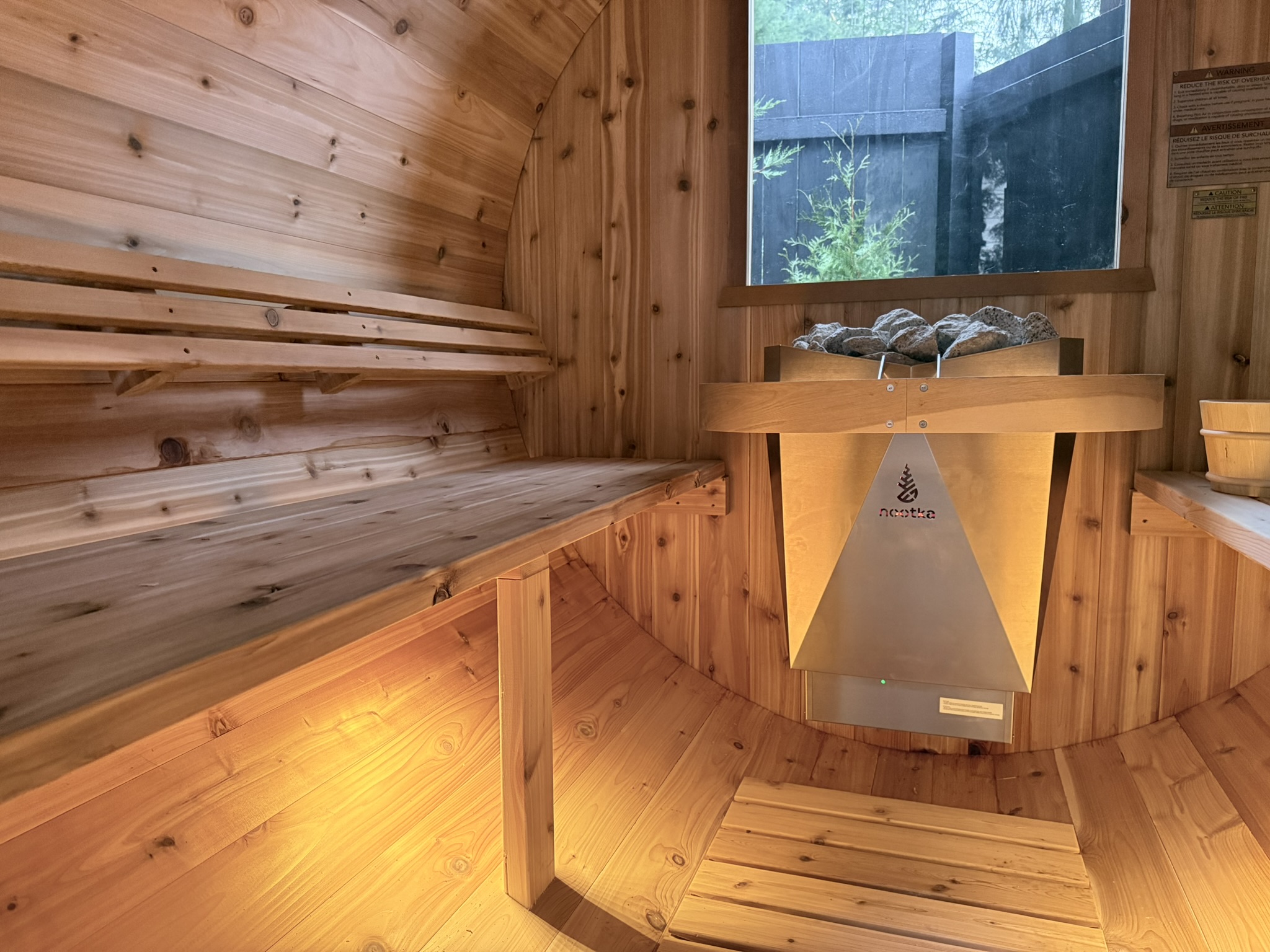
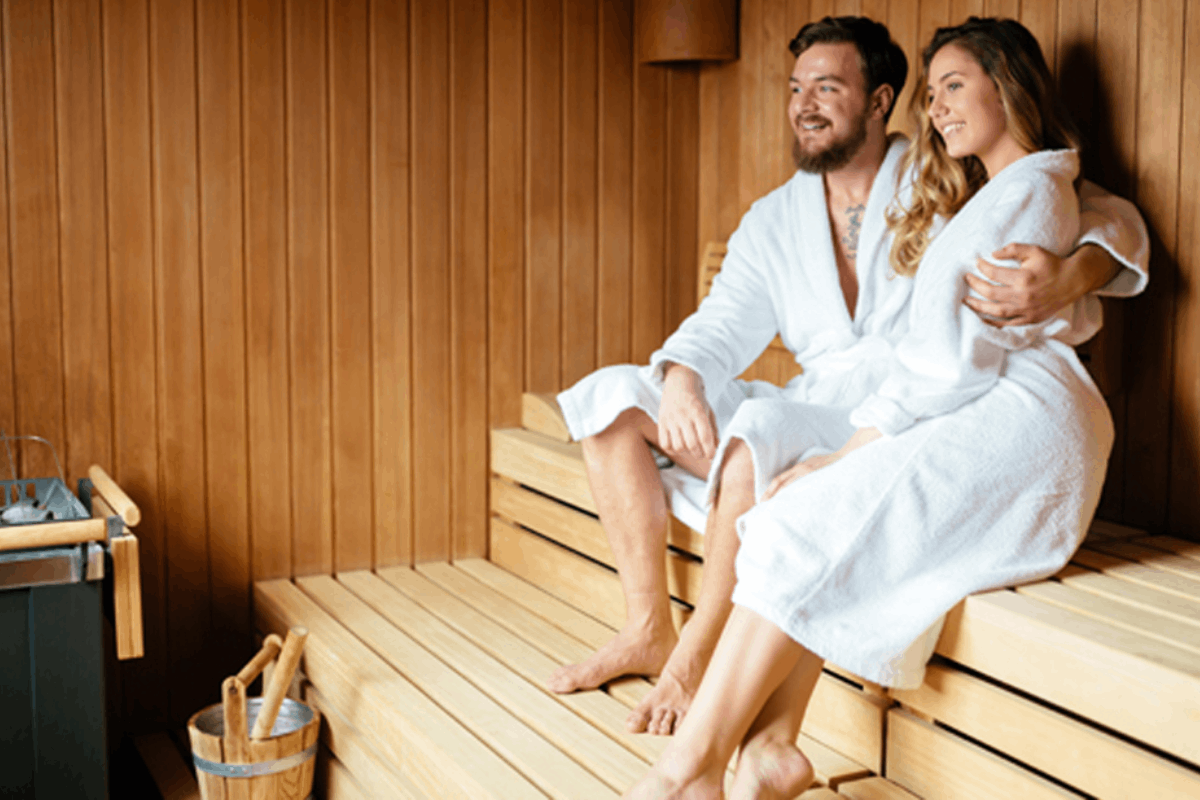
The biological transition from high-beta wave wakefulness to restorative Deep Sleep is governed by a necessary and steep drop in Core Body Temperature (CBT). Evolutionarily, as the sun set, the ambient temperature dropped, triggering the Suprachiasmatic Nucleus (SCN) to signal that it was time for the “biological night” to begin. In our modern, climate-controlled environments—saturated with artificial blue light and static temperatures—we have lost this vital evolutionary cue. At The Barnfield Suites, we use the Nootka cedar sauna as a sophisticated tool to “hack” this ancestral signal and reverse circadian rhythm disruption.
The Paradox of Heat for Sleep: Therapeutic Vasodilation
For those searching “how to fall asleep faster naturally,” it may seem counterintuitive to enter a 90°C+ infrared or traditional sauna to prepare for rest. However, the mechanism is a purely compensatory biological reset. When you subject the body to intense hyperthermic stress, your thermoregulatory system works aggressively to cool itself down through vasodilation—the widening of peripheral blood vessels. This process, often referred to in biohacking circles as “shunting,” brings blood flow to the skin’s surface to dissipate internal heat. This is the physiological foundation of thermal sleep therapy.
The Post-Sauna “Thermal Dump” and Melatonin Synthesis
The most critical phase of the circadian reset happens the moment you exit the sauna and step into the cool, oxygen-rich air of Bowen Island. As the dilated blood vessels at the surface of your skin meet the cool ambient temperature, your Core Body Temperature begins to plummet—a phenomenon known as the “Thermal Dump.”
This rapid decline in CBT is the single most powerful non-pharmacological trigger for the brain’s pineal gland to initiate endogenous melatonin production. By creating this “thermal cliff,” you are not just relaxing; you are chemically signaling your brain to reduce sleep onset latency (the time it takes to fall asleep). This physiological shift encourages the body to bypass light sleep and enter Slow Wave Sleep (SWS), or Stage 3 Non-REM sleep, more quickly. It is during this deep, restorative phase that the glymphatic system flushes neurotoxins from the brain and the majority of Growth Hormone (GH) secretion occurs, facilitating full-body cellular repair and metabolic optimization.
Phase 2: The Morning Ascent (The Metabolic Dawn & Cortisol Optimization)
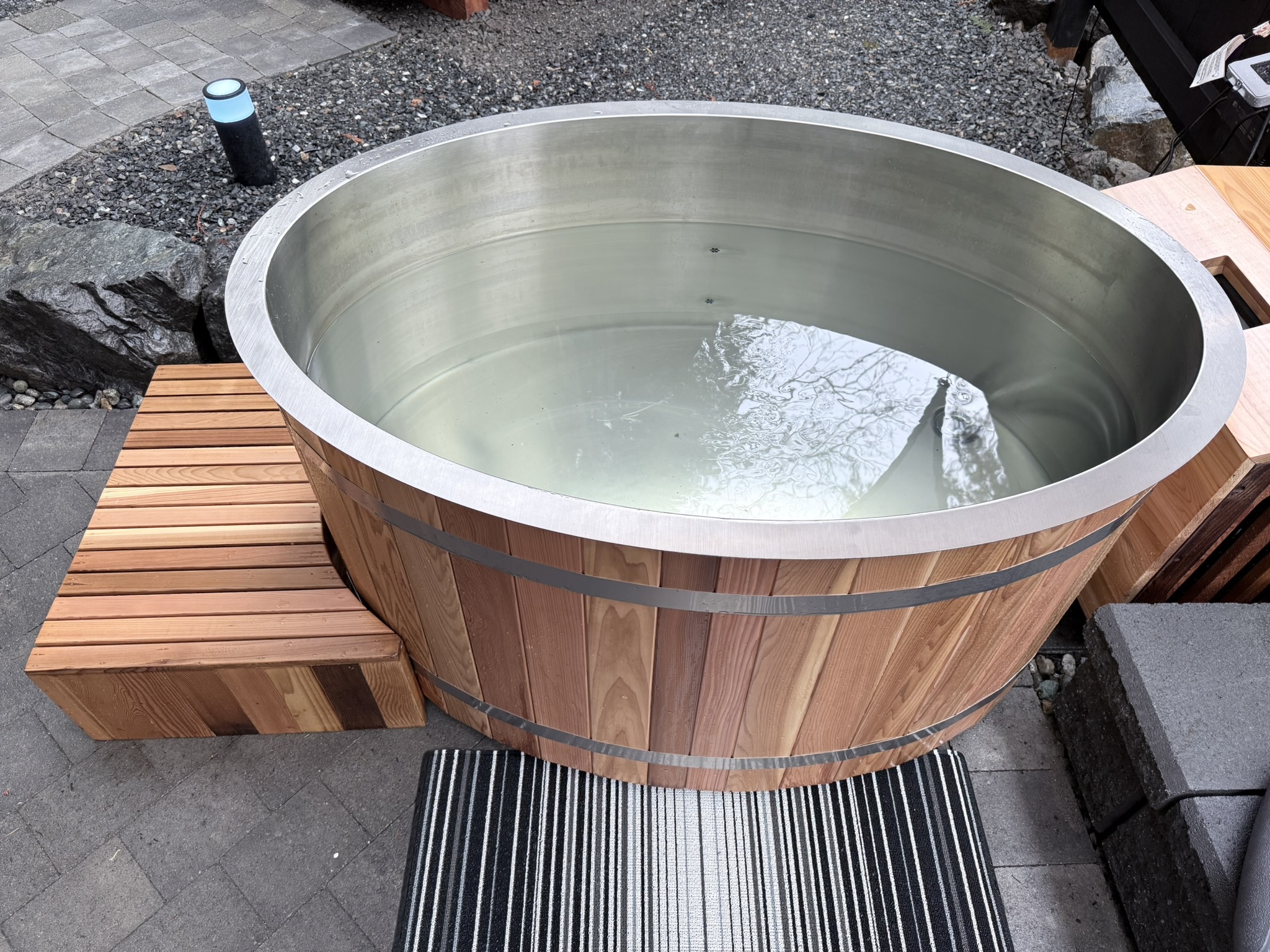
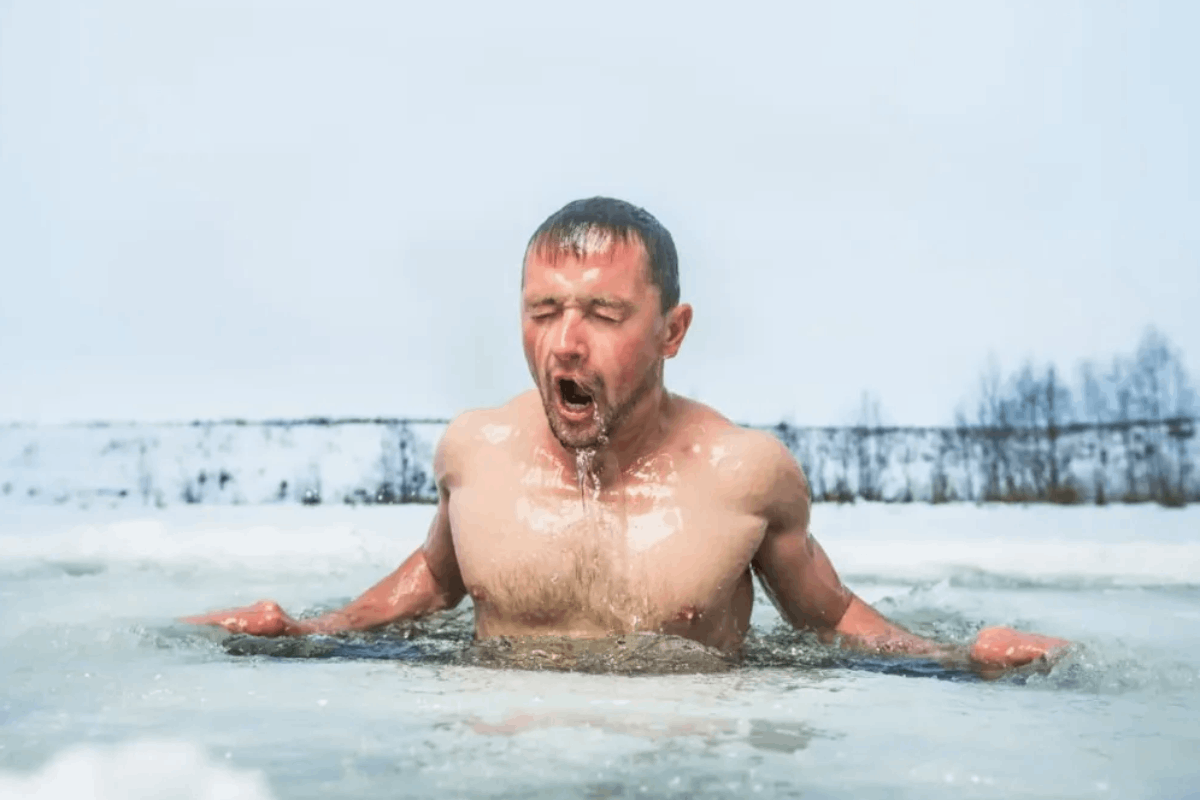
If the evening protocol is defined by the “thermal drop,” the morning is defined by the “hormetic spike.” To eliminate brain fog and achieve peak cognitive performance, your body requires a rapid rise in Core Body Temperature (CBT) and a robust, healthy surge of cortisol. Using the Helius oval cold plunge shortly after waking provides a powerful “metabolic dawn,” a biological anchor that recalibrates your circadian clock and dictates your energy levels for the next 16 hours. For those searching “how to wake up faster without caffeine,” this cold water immersion (CWI) protocol is the ultimate physiological solution.
Activating the Cortisol Awakening Response (CAR)
Many high-performers struggle with “sleep inertia”—the prolonged grogginess and circadian misalignment that can last for hours after waking. A 3-minute morning plunge at sub-10°C triggers an immediate, massive release of norepinephrine and dopamine (reaching up to 250% above baseline). This surge does more than provide a “jolt”; it optimizes the Cortisol Awakening Response (CAR).
By stimulating the sympathetic nervous system early in the day, you align your endocrine system with the natural Circadian Cortisol Curve. This ensures your peak alertness occurs when you need it most, sharpening executive function and prefrontal cortex activity, while ensuring cortisol levels naturally taper off in the evening to allow for melatonin synthesis.
Non-Shivering Thermogenesis & Metabolic Flexibility
Morning cold immersion is a potent catalyst for the activation of Brown Adipose Tissue (BAT), often called “liquid gold” in longevity science. Unlike white adipose tissue, brown fat is densely packed with mitochondria and burns glucose and lipids specifically to produce heat. This process, known as non-shivering thermogenesis, significantly increases your basal metabolic rate (BMR) and enhances metabolic flexibility—the body’s ability to efficiently switch between burning carbohydrates and fats for fuel.
By starting your day with a plunge at The Barnfield Suites, you are engaging in a mitochondrial reset. This prevents the dreaded mid-afternoon energy crash and post-prandial lethargy that often lead to excessive caffeine consumption—a primary culprit for fragmented sleep and insomnia later that night. You aren’t just waking up; you are building a metabolic engine that supports stable mood and sustained focus throughout the entire circadian cycle.
The Intersection of Sleep & Metabolic Health: Breaking the Cycle of Dysregulation
Sleep and metabolism are two sides of the same biological coin, functioning in a continuous feedback loop. In clinical terms, circadian disruption is a primary driver of metabolic syndrome. Poor sleep quality—specifically a lack of Slow Wave Sleep (SWS)—leads to immediate insulin resistance and a pathologically increased production of ghrelin (the hunger hormone) while suppressing leptin (the satiety hormone). Conversely, metabolic dysfunction and blood sugar instability are leading causes of fragmented sleep and nocturnal awakenings.
Insulin Sensitivity and the “3 AM Wake-Up” Mystery
One of the most frequent complaints for those searching for “why do I wake up at 3 AM?” is an undetected nocturnal blood sugar crash or hypoglycemic event. When your metabolism is inflexible, your body triggers a cortisol and adrenaline spike to stabilize glucose levels in the middle of the night, effectively pulling you out of deep REM sleep.
Regular use of our Cedarwood Elements circuit acts as a powerful insulin sensitizer. The intense heat of the Nootka cedar sauna triggers the production of Heat Shock Proteins (HSPs) and increases GLUT4 translocation, which improves how your cells uptake glucose. By stabilizing your blood sugar through the hormetic stress of contrast therapy, you prevent the glucose spikes and subsequent crashes that disrupt the sleep cycle, allowing for an uninterrupted, 8-hour sleep architecture.
Vagal Tone and the Sleep-Stress Connection: Mastering HRV
The vagus nerve is the primary “superhighway” of the parasympathetic nervous system (PNS). In the high-performance, fast-paced professional world of Vancouver, chronic sympathetic dominance (the “wired-but-tired” state) often leads to low vagal tone. This means the body has lost its biological ability to “switch off” and enter the rest-and-digest state necessary for sleep.
The Helius oval cold plunge acts as a definitive “vagal reset button.” During immersion, the Mammalian Dive Reflex is triggered, immediately lowering the heart rate and stimulating the vagus nerve to increase parasympathetic outflow. Over a 30-day Longevity Residence stay, guests can significantly and measurably improve their Heart Rate Variability (HRV). As the “gold-standard” metric for autonomic nervous system balance, a high HRV indicates a nervous system that is not just recovered, but deeply prepared for the restorative neuro-regeneration that only occurs during high-quality sleep.
Frequently Asked Questions
Mastering Your Chronobiology with Contrast Therapy
1. How exactly does an evening sauna fix chronic insomnia and sleep onset latency?
Chronic insomnia is often fundamentally a failure of the body to lower its Core Body Temperature (CBT) at the appropriate time. Evolutionarily, our bodies need to drop their internal
temperature by 1 to 2 degrees to initiate sleep. The Nootka cedar sauna forces an intense rise in peripheral temperature, which triggers a massive “thermal dump” upon
exit through vasodilation. This rapid cooling of the core is a powerful biological signal to the brain’s sleep-initiation centers
(the prefrontal cortex and hypothalamus), making sleep onset almost inevitable by stimulating natural melatonin synthesis.
2. Why is a morning cold plunge more effective for sustained energy than caffeine?
Caffeine is an adenosine antagonist; it merely masks tiredness by blocking the receptors that signal “sleep pressure,” often leading to a “caffeine crash” once it wears off. Conversely,
a morning cold plunge in the Helius oval plunge triggers a natural, endogenous surge of norepinephrine and
dopamine (up to 250% above baseline). This provides a sustained, “clean” energy and heightened executive function that lasts for several hours without the jittery
side effects or the afternoon energy dip associated with stimulants.
3. Does hydrothermal therapy increase Deep Sleep (SWS) or REM sleep more?
While both are improved, evening sauna use specifically facilitates a higher percentage of Slow Wave Sleep (SWS), or Deep Sleep. This
is the most physically restorative stage of the sleep architecture, where the glymphatic system (the brain’s waste-clearance system)
flushes out metabolic debris like beta-amyloid. By facilitating a steeper drop in CBT, you ensure your brain spends more time in this critical phase of neuro-regeneration and
Growth Hormone (GH) secretion.
4. What is the “Circadian Rhythm” and how does Bowen Island’s environment help fix it?
Your Circadian Rhythm is your 24-hour internal biological clock, governed by the Suprachiasmatic Nucleus (SCN). It is highly sensitive
to light and temperature. Bowen Island’s lack of urban light pollution and our private sanctuary’s low-blue-light environment eliminate
the HEV light that typically suppresses melatonin. This allows your rhythm to “entrain” or synchronize to the natural day/night cycle, effectively curing circadian misalignment and
“social jetlag.”
5. How long before I plan to sleep should I use the sauna for maximum effect?
The “Circadian Sweet Spot” is 1 to 2 hours before bed. This window provides enough time for the initial vascular flush and high heart rate to subside, allowing the Core Body Temperature to
reach its lowest point (the “thermal cliff”) just as your head hits the pillow. Using it too close to bedtime may leave your heart rate too elevated for immediate sleep onset.
6. Can a morning cold plunge really help with weight loss and metabolic rate?
Yes, through a process called Non-Shivering Thermogenesis (NST). By activating Brown Adipose Tissue (BAT), or “brown fat,” the cold plunge
turns your body into a metabolic furnace. Unlike white fat, brown fat burns glucose and calories to generate heat. Regular morning immersion increases your Basal Metabolic Rate (BMR) and
helps improve adiponectin levels, which are crucial for fat oxidation and long-term metabolic health.
7. What is “Metabolic Flexibility” and why is it the gold standard for health?
Metabolic Flexibility is the body’s ability to seamlessly switch between burning carbohydrates (glucose) and body fat (lipids) for fuel. Chronic poor sleep impairs this ability, leading
to insulin resistance. Thermal stress—the “shock” of hot and cold—improves mitochondrial efficiency and biogenesis,
which are the primary drivers of metabolic flexibility, ensuring you have stable energy throughout the day.
8. Why is the “Søberg Principle” critical for circadian and sleep health?
To optimize your biological clock, you must follow the Søberg Principle: end with cold in the morning to trigger a cortisol spike and
metabolic alertness, and end with heat (or natural cooling) in the evening to trigger the vasodilation-led sleep response. This “thermal contrast” provides the brain with clear “start”
and “stop” signals for the day.
9. How does hydrothermal therapy impact my insulin sensitivity and blood sugar?
Both heat and cold exposure increase the expression of GLUT4 receptors, which improves how your cells respond to insulin. Enhanced
insulin sensitivity leads to more stable blood sugar levels throughout the night. This is vital for preventing “midnight wakings” caused by nocturnal glucose fluctuations
and the subsequent stress hormone spikes that pull you out of REM sleep.
10. What is the connection between the “Vagus Nerve” and my sleep quality?
The vagus nerve is the primary highway of the parasympathetic nervous system. Cold water immersion stimulates the vagus nerve, which
immediately increases Heart Rate Variability (HRV). A higher HRV is the ultimate biological marker for a resilient nervous system that
can pivot easily from a high-stress “fight-or-flight” state into the “rest and digest” state required for deep, uninterrupted rest.
11. Is there any “Blue Light” risk in the Barnfield saunas during evening use?
No. We have engineered our Nootka saunas with low-frequency, warm-toned (amber) lighting. This ensures that your brain’s melatonin production is
not interrupted by the melanopic blue light found in most modern spas, protecting your circadian entrainment during your evening
ritual.
12. Can the propane fire bowl actually help me sleep better through visual sedation?
Yes. Staring at the rhythmic, low-frequency flicker of a natural flame—often called “Fire Gazing”—acts as a visual sedative. This practice helps shift brainwave activity from high-frequency
Beta waves (associated with anxiety and focus) to Alpha and Theta waves, which are associated with deep relaxation and the “pre-sleep” state.
13. What is the “Cortisol Awakening Response” (CAR) and how do I optimize it?
CAR is the natural, sharp boost in cortisol your body should produce within 30 minutes of waking to ensure alertness. A morning cold plunge enhances this hormonal spike,
clearing adenosine and ensuring you feel “fully awake” and cognitively sharp without the need for exogenous stimulants.
14. How does the ocean air on Bowen Island impact my respiratory and sleep health?
The air at The Barnfield Suites is rich in negative ions and trace minerals like magnesium from the Salish Sea. Inhaling this
“sea spray” during your post-sauna integration helps relax the bronchial tubes, lowers systemic inflammation, and provides a soothing effect on the nervous system, further promoting
sleep hygiene.
15. Can the Helius oval plunge alleviate Restless Leg Syndrome (RLS) at night?
Many guests report relief from Restless Leg Syndrome (RLS) through the “vascular pump” effect of contrast therapy. The rapid transition
between heat-induced vasodilation and cold-induced vasoconstriction flushes the lymphatic system and improves peripheral circulation,
reducing the “creepy-crawly” sensations that often disrupt sleep.
16. Why is total privacy important for optimizing my circadian rhythm?
Any social interaction, “performance,” or environmental noise triggers cortisol and adrenaline, which are the biological enemies
of sleep. Our private 1,000 sq. ft. sanctuary ensures your brain’s amygdala feels completely safe. This psychological safety is
a mandatory prerequisite for the nervous system to enter a deep parasympathetic state.
17. What is “Adenosine” and how does the sauna interact with it?
Adenosine is the chemical byproduct of cellular energy use that builds up in the brain throughout the day to create “sleep pressure.” While
the sauna doesn’t create adenosine, the thermal downshift it induces makes your brain more receptive to the adenosine pressure you’ve already built up, facilitating a much faster
transition into Stage 1 sleep.
18. Is it safe for my children to use these circadian sleep protocols?
While warm (not hot) saunas can be relaxing, children’s thermoregulation systems are not as developed as adults. They heat up and cool down much faster. We recommend very short
durations, lower temperatures, and constant, direct parental supervision for any child using our hydrothermal facilities.
19. What is the ideal “Sleep Protocol” cycle for a beginner at Barnfield?
For sleep optimization, we suggest the “Gentle Downshift”: 15–20 minutes in the Nootka sauna, followed by a cool (not freezing) rain
shower, and then 15 minutes of quiet reflection by the fire bowl. This allows the “thermal dump” to occur naturally without a second
“shock” to the system.
20. What exactly is “Non-Shivering Thermogenesis” (NST)?
NST is a metabolic process where Brown Adipose Tissue (BAT) burns stored energy (fat) to create heat at a cellular level without
the need for physical shivering. This is a highly efficient metabolic workout triggered by the morning plunge, which helps regulate body weight and improves glucose disposal.
21. Can the sauna help with symptoms of mild Sleep Apnea?
The warm, moist air in a traditional sauna can help clear the upper respiratory tract, reduce sinus inflammation, and improve airway resistance.
While not a cure for Obstructive Sleep Apnea (OSA), many find it leads to more comfortable breathing and reduced snoring when used as part of a nightly sleep hygiene routine.
22. How does a 30-day “Longevity Residence” stay fix my sleep permanently?
It takes roughly 21 to 28 days to “entrain” a new circadian rhythm and reset the brain’s neurochemical baselines. A
30-day stay allows your hormones—melatonin, cortisol, and dopamine—to fully align with the natural biophilic cycles of Bowen Island, creating a new “biological habit”
of deep rest.
23. Why do I feel so drowsy immediately after exiting the sauna?
This is the “Post-Sauna Cool Down” effect. As your body works to lower its core temperature, it diverts blood flow to the skin and away from the brain’s “arousal centers,” creating
a natural, heavy state of sleepiness that mimics the body’s natural transition into nocturnal rest.
24. Is the electric Nootka sauna better than an infrared sauna for sleep?
Traditional high-heat saunas are generally superior for sleep because they raise your Core Body Temperature more effectively
than infrared. A higher peak temperature leads to a more dramatic and rapid thermal drop afterward, which is the primary mechanism for triggering the melatonin response.
25. Does “Forest Bathing” before my sauna session improve the sleep results?
Yes. The phytoncides (essential oils) released by the evergreen trees on our Bowen Island property have been clinically shown to lower cortisol and
increase the duration of Deep Sleep. Inhaling these during a Shinrin-yoku walk before your evening sauna creates a “compounding
effect” for relaxation.
26. How do I get from the Vancouver city center to this sleep retreat?
The journey is the first step of your circadian reset. The 20-minute BC Ferries ride from Horseshoe Bay to Snug Cove acts
as a “liminal buffer zone.” It provides the physical and psychological distance needed to leave urban technostress behind and enter a state of parasympathetic recovery.
27. Is the water in the morning cold plunge filtered and hygienic?
Absolutely. To ensure a clinical-grade experience, our Helius plunges utilize advanced Ozone and UV-C filtration systems. This
ensures your morning metabolic reset happens in oxygenated, purified water that meets the highest standards of hygiene and safety.
28. Why choose The Barnfield Suites over a luxury hotel for sleep health?
Most luxury hotels suffer from environmental stressors: hallway noise, light leakage, and public spas that trigger the “social brain.” We provide a private, 1,000 sq. ft. sanctuary specifically
engineered for chronobiological repair, offering the silence and total light control required for a true psychiatric and physiological reset.
29. How does the “Thermal Dump” facilitate glymphatic drainage during sleep?
The glymphatic system is the brain’s waste-management pathway, which becomes ten times more active during Slow Wave Sleep (SWS).
By using an evening sauna to trigger a rapid core body temperature (CBT) drop, you accelerate the transition into deep sleep. This allows the brain to begin “shinking” its glial cells
sooner, opening up space for cerebrospinal fluid to flush out metabolic neurotoxins like beta-amyloid and tau proteins,
which are linked to cognitive decline and chronic “brain fog”.
30. Can a cold plunge help “clear” adenosine if I didn’t get enough sleep?
While caffeine only blocks adenosine receptors, a morning cold plunge provides a different mechanism. The massive surge in norepinephrine and
dopamine (up to 250% sustained increase) provides an exogenous-like energy boost that sharpens executive function without
the jittery crash of stimulants. While it doesn’t “remove” adenosine, it enhances your metabolic alertness, helping you override sleep inertia and
stay focused until your natural circadian drive takes over.
31. What is “Social Jetlag” and can contrast therapy fix it?
Social Jetlag occurs when your internal biological clock is out of sync with your social or professional schedule—common for Vancouver professionals who work late and wake early. By
using the Cedarwood Elements circuit, you provide your brain with strong “Zeitgebers” (time-givers). The morning cold acts as a
circadian anchor for wakefulness, while the evening sauna acts as an anchor for sleep, helping to “re-train” your SCN to a consistent 24-hour cycle.
32. Why should I use “Face Submergence” during my cold plunge for sleep?
The Mammalian Dive Reflex is most effectively triggered by cold receptors on the face, specifically around the eyes and nose. Submerging your face during your plunge immediately
sends a signal via the trigeminal nerve to the vagus nerve, inducing a rapid drop in heart rate and an increase in
Heart Rate Variability (HRV). This “vagal brake” is essential for switching the nervous system from a high-alert sympathetic state to a restorative parasympathetic state.
33. How does “Thermal Stress” impact growth hormone (GH) secretion?
Evening sauna use has been shown to significantly increase the natural secretion of Growth Hormone (GH), particularly when followed by the thermal downshift into
deep sleep. GH is primarily released during the first half of the night in Slow Wave Sleep. By maximizing the depth of this stage through hydrothermal therapy,
you optimize your body’s ability to repair muscle tissue, burn fat, and support cellular longevity.
34. Is it better to end on “Hot” or “Cold” for evening sleep protocols?
For sleep, the “End on Heat” rule is generally superior. Unlike the morning protocol (the Søberg Principle), where you end on cold
to force a metabolic reheat, an evening session should end with the sauna or a warm shower. This ensures your blood vessels remain dilated (vasodilation), allowing your body to continue
dumping heat as you go to bed, which is the primary trigger for melatonin production and sleep onset.
35. Can “Brown Fat” (BAT) activation improve my sleep-time metabolism?
Yes. By stimulating Brown Adipose Tissue through a morning cold plunge, you improve your metabolic flexibility and
insulin sensitivity. A more efficient metabolic engine means your body is better at maintaining stable glucose levels during the night. This prevents the
nocturnal cortisol spikes that cause “light sleep” and early morning awakenings, leading to a more profound and uninterrupted night’s rest.
36. Why is Bowen Island’s “Buffer Zone” critical for circadian entrainment?
Circadian entrainment requires the removal of “technostress” and artificial light. The physical journey to Bowen Island—the ferry ride and the transition into a biophilic, zero-noise environment—acts
as a psychological and physiological “liminal space.” This reduces baseline cortisol before you even begin your therapy, making your nervous system much more responsive to the
thermal signals of the sauna and plunge.