

Menopause changes metabolism — but it does not have to define it. Emerging research suggests that structured cold immersion and contrast therapy may activate metabolic pathways that support fat oxidation, insulin sensitivity, and hormonal resilience during perimenopause and menopause.
Search trends for “menopause weight gain,” “cold plunge fat loss,” and “brown fat activation women over 40” have increased significantly over the past three years. Women are seeking non-pharmaceutical, evidence-informed strategies to manage midlife metabolic shifts. One increasingly discussed method is cold immersion therapy, often practiced within structured contrast therapy retreats.
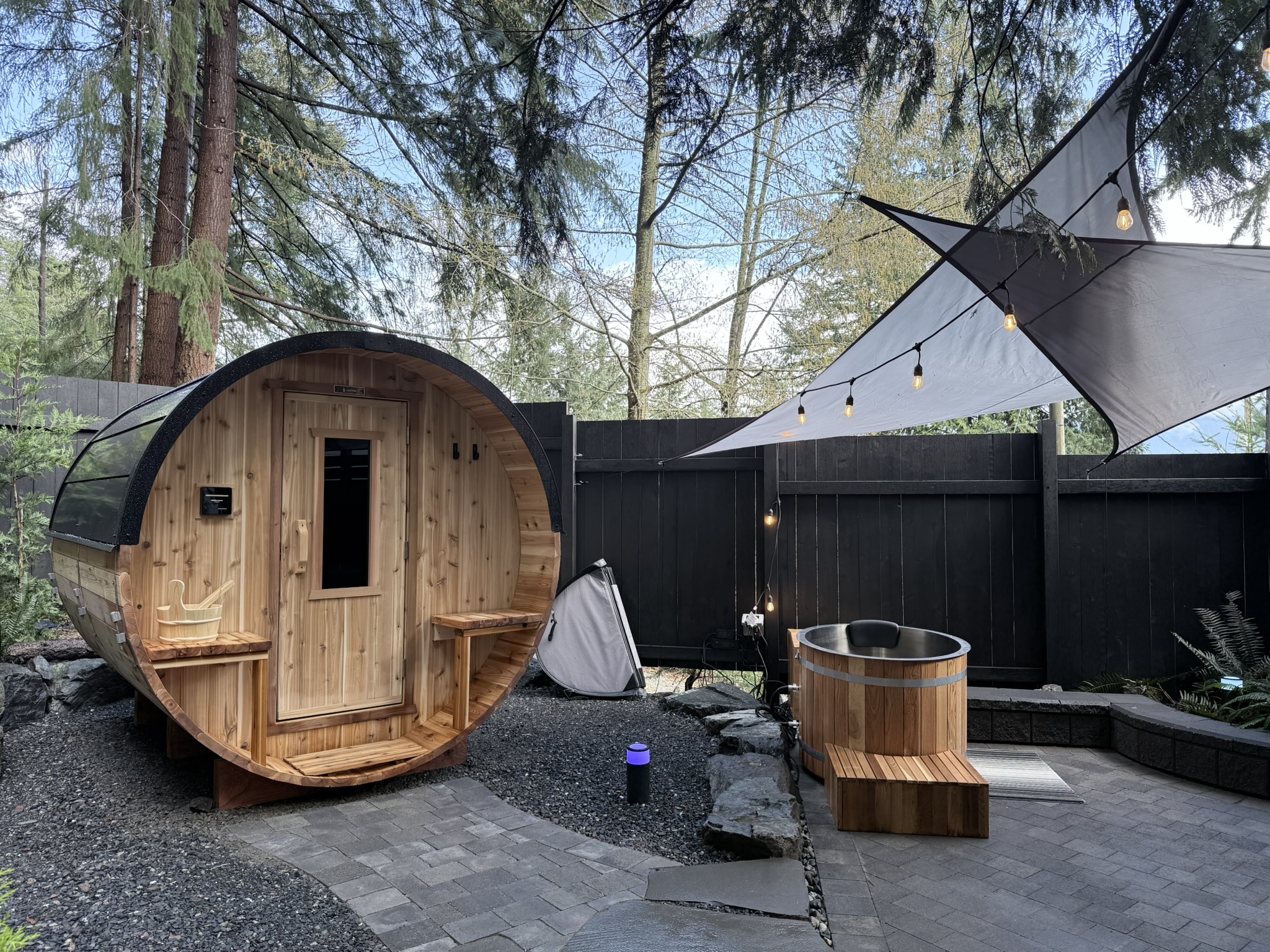
On Canada’s West Coast, women are integrating these protocols into immersive wellness experiences near Vancouver — including guided sauna and cold immersion at boutique retreats.
Understanding the Menopause Metabolic Shift
Menopause is not simply the cessation of menstruation—it represents a complex hormonal transition that impacts metabolic systems across the body.
What Changes During Menopause?
- Hormonal Cascade (Estrogen and Progesterone): The significant decline in estradiol affects nearly every tissue in the body. Estradiol is a “master regulator” of energy; its loss disrupts
how the brain and peripheral tissues coordinate energy intake and expenditure.
- Sarcopenia (Reduced Lean Muscle Mass): Estrogen helps maintain muscle protein quality and satellite cell function (muscle repair). During the transition, women lose an average of
0.5% of muscle mass, which directly lowers the calories burned at rest.
- Visceral Fat Accumulation: Fat storage shifts from a “pear-shaped” (subcutaneous) to an “apple-shaped” (visceral) pattern. Visceral fat is more metabolically active and pro-inflammatory,
increasing the risk of cardiovascular disease and type 2 diabetes.
- Decreased Resting Metabolic Rate (RMR): Research indicates that women burn 150–200 fewer calories per day within five years of menopause.
This is driven by a combination of muscle loss and reduced mitochondrial efficiency—cells literally become less efficient at turning fuel into energy.
- Insulin Sensitivity and Glucose Disposal: Estrogen protects pancreatic cells and helps maintain glucose transport. As levels fall, the body may become more resistant to insulin,
leading to higher fasting blood sugar and a greater tendency to store energy as fat.
- Appetite Hormone Disruption: Sleep loss (often caused by hot flashes) increases ghrelin (the hunger hormone) and decreases leptin (the fullness hormone). Simultaneously, the loss of estrogen in the hypothalamus can directly increase cravings and reduce the sensation of satiety.
The Protective Role of Estrogen
Research shows that estrogen plays a protective role in metabolic regulation. As levels decline, women may experience increased abdominal fat accumulation and decreased metabolic efficiency. This shift often begins in late perimenopause, roughly two years before the final period, making this a critical window for lifestyle interventions like resistance training and high-protein diets to preserve metabolic health.
Why Weight Gain Happens During Menopause
1. Estrogen Decline and Fat Distribution
Lower estrogen shifts fat storage toward the abdomen. Visceral fat is metabolically active and associated with increased inflammation.
2. Muscle Mass Reduction
Age-related sarcopenia reduces resting metabolic rate.
3. Sleep Disruption
Night sweats and insomnia influence ghrelin and leptin regulation — hormones controlling hunger and satiety.
4. Insulin Sensitivity Changes
Estrogen decline can influence glucose metabolism, increasing risk of metabolic syndrome.
The Science of Cold Immersion and Metabolism
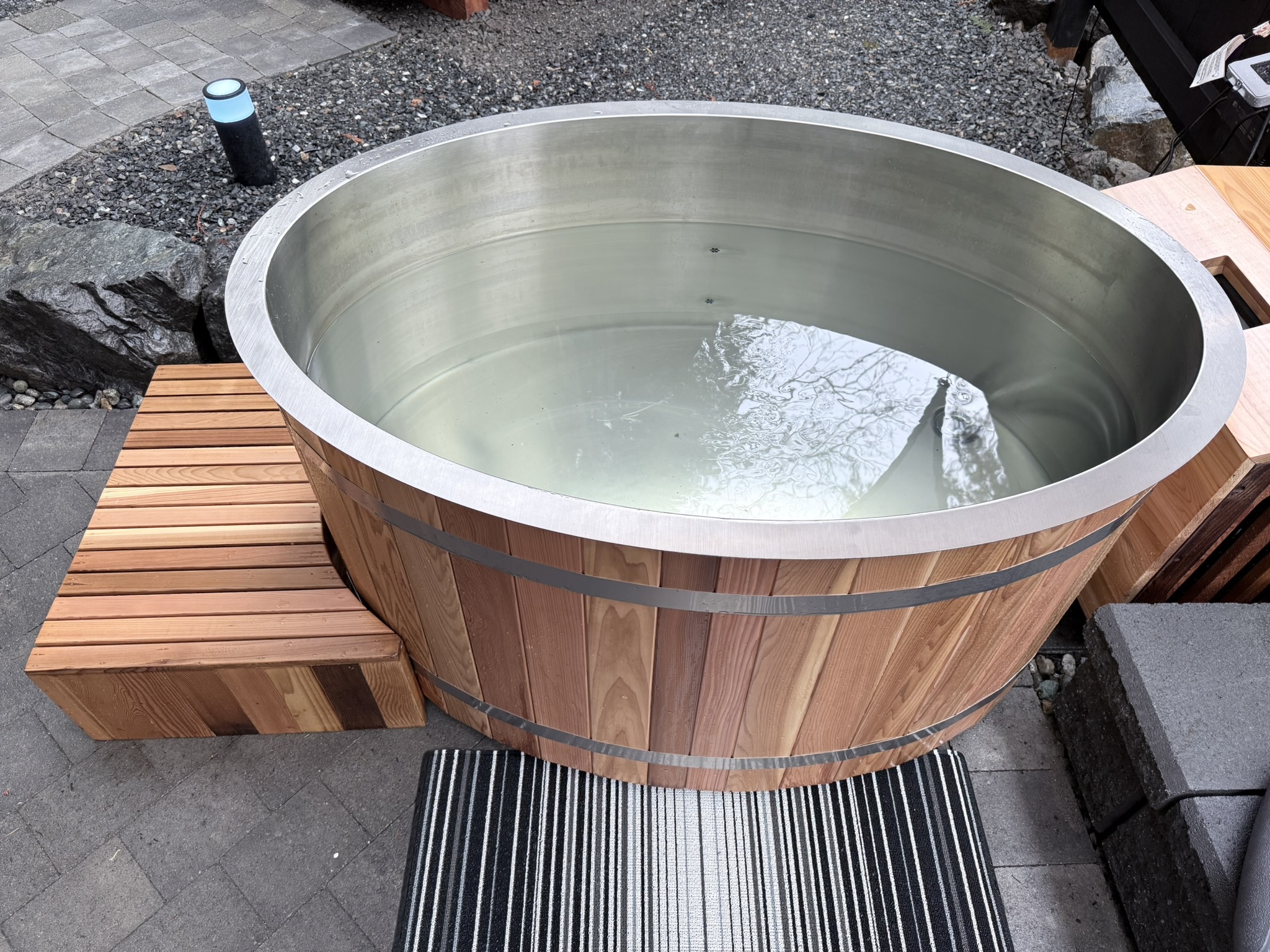
Cold immersion stimulates thermogenesis — the production of heat in response to cold stress. This process requires energy expenditure.
Brown Adipose Tissue (BAT): The Metabolic Engine
Cold immersion triggers cold-induced thermogenesis (CIT), a metabolic process where the body burns energy to maintain core temperature, primarily through shivering and non-shivering thermogenesis (NST). Brown Adipose Tissue (BAT) acts as a metabolic engine, utilizing mitochondria and UCP1 protein to convert stored energy into heat, while cold exposure induces norepinephrine to activate this process and promote the browning of white fat. Learn more about the science at PubMed Central.
While muscle does the heavy lifting, activated brown fat also plays a supportive role in glucose management. Direct Glucose Clearance: Once activated by cold, brown fat takes up large amounts of glucose and free fatty acids from the bloodstream to fuel thermogenesis (heat production). Metabolic Stability: Higher levels of brown fat are correlated with lower glucose variability, helping to maintain stable blood sugar levels throughout the day. Cold immersion increases norepinephrine levels, enhancing lipolysis (fat breakdown) and metabolic activation
Cold Exposure and Insulin Sensitivity
Studies suggest that cold exposure may improve insulin sensitivity and glucose metabolism through several key biological pathways.
The Role of Skeletal Muscle and GLUT4
The most significant improvements in insulin sensitivity appear to be driven by skeletal muscle rather than brown fat alone.
GLUT4 Translocation: Cold exposure triggers the movement of GLUT4 (a glucose transporter protein) to the surface of muscle cells. This allows muscles to clear glucose from the bloodstream more efficiently, even in the absence of high insulin levels.
Shivering as a “Metabolic Workout”: The mechanical contraction of muscles during shivering acts similarly to a high-intensity workout, burning significant calories and potentially improving insulin sensitivity more effectively than standard exercise in some controlled settings.
Therapeutic Potential for Type 2 Diabetes: Clinical trials have shown that just 10 days of cold acclimation (exposure to temperatures of roughly 14–15°C) can increase peripheral insulin sensitivity by as much as 43% in individuals with type 2 diabetes.
Hormonal and Systemic Improvements
Regular cold exposure, such as winter swimming or consistent cold water immersion (CWI), can lead to long-term metabolic adaptations.
Reduction in Fasting Glycemia: Repeated cold exposure has been shown to reduce fasting blood glucose levels and overall insulin resistance, particularly in lean subjects and women.
Adiponectin and Thyroid Function: Some researchers suggest that cold exposure may increase levels of adiponectin, a hormone that increases insulin sensitivity, and alter thyroid hormone levels to further support a healthy metabolism.

How Sauna Complements Cold for Metabolic Health
Contrast therapy—alternating between heat and cold—creates a powerful synergy that enhances circulation, metabolic flexibility, and long-term health span.
1. The “Vascular Pump” and Metabolic Flexibility
Alternating between a sauna and a cold plunge forces your blood vessels to rapidly dilate (vasodilation) and constrict (vasoconstriction).
- Enhanced Nutrient Delivery: This rhythmic “vascular pump” stimulates circulation, flushing out metabolic waste products like lactic acid and delivering oxygen-rich blood to tissues more efficiently.
- Metabolic Adaptability: This process trains your body to switch between different states of energy expenditure and physiological stress, fostering “metabolic flexibility”—the body’s ability to efficiently transition between burning carbohydrates and fats for fuel.
2. Synergistic Effects on Insulin and Inflammation
While cold exposure directly activates brown fat and improves glucose uptake, frequent sauna use provides a critical, complementary layer of metabolic protection.
- Cardiovascular Conditioning: Sauna bathing induces a controlled thermal stress that mimics moderate-intensity physical exercise. This “passive cardio” increases heart rate and improves endothelial function (the health of your blood vessel lining), which is essential for maintaining healthy blood pressure and insulin sensitivity.
- Systemic Inflammation Reduction: Regular sauna use is associated with a reduction in key markers of systemic inflammation, such as C-reactive protein (CRP). Reducing chronic low-grade inflammation is vital for preventing metabolic syndrome and type 2 diabetes.
3. Stress Resilience and Hormetic Adaptation
Both heat and cold function as hormetic stressors—short bursts of manageable stress that trigger protective cellular adaptations.
- Nervous System Balancing: Heat exposure primarily activates the parasympathetic “rest and digest” system, while cold triggers the sympathetic “fight or flight” response. Alternating between these states trains your nervous system to recover more quickly from stressors, leading to improved heart rate variability (HRV) and emotional regulation.
- Cellular Repair (HSPs): The heat of the sauna triggers the production of heat shock proteins (HSPs), which act as cellular “guardians,” repairing damaged proteins and protecting against oxidative stress—a primary driver of metabolic aging.
4. The Nordic Cycle Protocol
To maximize these metabolic benefits, many practitioners follow the “Nordic Cycle”:
- Heat (15–20 min): Elevate your core temperature in a traditional or infrared sauna.
- Cold (2–3 min): Immediately plunge into cold water to activate brown fat and shock the vascular system.
- Repeat: Complete 2–3 rounds for cumulative benefits.
- End with Cold: Scientific research, notably the Søberg Principle, suggests that ending with a cold plunge (and allowing the body to reheat naturally) forces the body to use more energy to reach homeostasis, further boosting metabolic rate.
Cold Immersion and Menopause:
What the Emerging Research Suggests
While long-term randomized menopause-specific trials are limited, observational studies show promising trends:
- Reduced hot flash severity
- Improved mood stability
- Enhanced sleep quality
- Greater perceived energy levels
A 2024 study involving over 1,100 women found cold water swimming reduced menopausal symptoms including anxiety and hot flashes.
Emerging research, including a 2024 survey of over 1,100 women published in Post Reproductive Health, suggests cold water immersion (CWI) acts as a promising non-pharmacological tool for mitigating menopausal symptoms. Participants reported significant reductions in anxiety, hot flashes, and mood swings, likely due to improved thermoregulatory control, sustained dopamine spikes, and increased beta-endorphin release. Additionally, CWI helps lower systemic inflammation and aids sleep quality by facilitating a lower core body temperature, addressing common complaints like arthralgia and insomnia. For more detailed insights on the study and its findings, visit the online Post Reproductive Health journal.
The Metabolic Switch:
How Cold Exposure May Support Fat Loss
1. Increased Energy Expenditure
Thermogenesis requires calories.
2. Improved Glucose Uptake
BAT activation improves glucose clearance.
3. Hormetic Stress Adaptation
Controlled stress strengthens metabolic resilience.
Cold immersion drives metabolic benefits through increased energy expenditure via thermogenesis, improved insulin-independent glucose uptake, and hormetic cellular adaptation. These mechanisms collectively enhance mitochondrial function, increase metabolic rate, and improve insulin sensitivity, aiding in systemic metabolic resilience. Cold immersion boosts metabolism and improves insulin sensitivity by forcing the body to generate heat through brown adipose tissue activation and shivering, increasing calorie burn. This process, often utilized through the Søberg Principle, also enhances metabolic resilience through hormetic stress and norepinephrine release. Cold exposure enhances metabolic function by increasing energy expenditure through non-shivering thermogenesis in brown adipose tissue and involuntary shivering, which can spike metabolic rates 3 to 5 times. It improves glucose uptake by activating brown fat as a glucose sink and triggering GLUT4 translocation to muscle cells, while fostering hormetic stress adaptation by increasing cold shock proteins and improving autonomic nervous system resilience.
Actionable Cold Immersion Guidelines for Menopause
Beginner Protocol
- Water temperature: 10–15°C
- Duration: 30–60 seconds
- Frequency: 2–3 times per week
Intermediate Protocol
- Water temperature: 8–12°C
- Duration: 1–2 minutes
- Frequency: 3–4 times per week
Always consult a healthcare provider before starting cold immersion.

Why Retreat Environments Amplify Cold Immersion Results
Cold immersion alone is a powerful metabolic tool, but a structured retreat environment provides the necessary biological and psychological framework to ensure those physiological shifts are sustainable and safe.
1. Guided Contrast Therapy Cycles
Structured retreats move beyond simple cold plunging by implementing The Nordic Cycle—alternating specific durations of high heat (sauna) with precise cold immersion.
Vascular Pump Effect: The rapid transition from vasodilation (heat) to vasoconstriction (cold) creates a “vascular pump” that flushes metabolic waste and enhances nutrient delivery to tissues.
Hormetic Training: Expert-led cycles act as a controlled “training ground” for the autonomic nervous system, building resilience by teaching the body to navigate the space between the sympathetic “fight or flight” and parasympathetic “rest and digest” states.
2. Nutrition Support & Metabolic Fueling
A retreat setting allows for precision fueling that aligns with the increased caloric demands of cold-induced thermogenesis.
Insulin Management: Professional nutrition support focuses on low-glycemic, anti-inflammatory diets that complement the improved glucose clearance triggered by cold exposure.
Chrono-Nutrition: Meal timing is often optimized to support mitochondrial health and stabilize blood sugar, which is particularly critical for managing the metabolic shifts seen in perimenopause and menopause.
3. Sleep Hygiene Optimization
Sleep is the primary period for metabolic repair, and retreats provide a “digital detox” environment free from blue-light interference.
Melatonin Regulation: Lowering core body temperature through evening cold immersion, followed by a cool, dark sleeping environment, can significantly reduce sleep-onset latency.
Hormonal Repair: Deep sleep is essential for the pulsatile secretion of hormones that manage muscle repair and fat metabolism, processes often disrupted by menopausal night sweats.
4. Breathwork for Nervous System Regulation
Guided breathwork is the “remote control” for the nervous system, allowing participants to override the initial cold-shock response.
Vagal Nerve Stimulation: Techniques like Box Breathing or 4-7-8 Breathing stimulate the vagus nerve, signaling safety to the brain and lowering cortisol levels.
Carbon Dioxide Tolerance: Structured breathing improves CO2 tolerance, which can enhance overall energy levels and reduce the anxiety often associated with the cold-water experience.
5. Nature Immersion & Coastal Benefits
The specific geography of a retreat—particularly near Vancouver and the Pacific Northwest—provides unique “ecotherapy” benefits.
Phytoncide Exposure: Immersion in BC’s coniferous forests exposes participants to phytoncides, natural plant compounds that have been shown to boost immune function and lower stress hormones.
Aerosolized Minerals: Coastal air is rich in negative ions and salt minerals, which can improve respiratory efficiency and further support parasympathetic activation.
6. Community Accountability & Shared Healing
The social dimension of a retreat is a critical factor in long-term success, especially for women navigating similar health transitions.
The “Supportive Mirror”: Sharing the experience with a group of like-minded individuals reduces the isolation of health struggles and normalizes the process of facing physical discomfort.
Sustained Habit Formation: Accountability relationships formed during a retreat provide the social “glue” that helps transition these new metabolic practices into a permanent home routine.
Who Should Consider Cold Immersion for Metabolic Support?
- Women in perimenopause
- Women experiencing midlife weight gain
- Women with insulin resistance risk
- Women seeking non-pharmaceutical metabolic strategies
Safety Considerations
- Avoid cold immersion if cardiovascular instability is present
- Never plunge alone
- Hydrate adequately
- Exit immediately if dizzy
Menopause & Cold Immersion:
Frequently Asked Questions
Q: Why does metabolism slow during menopause?
A: The metabolic slowdown in midlife is a multi-factorial process driven largely by the decline in estrogen and progesterone. Estrogen is a key regulator of insulin sensitivity; as levels drop, the body becomes less efficient at processing glucose. Simultaneously, women face age-related sarcopenia (muscle loss), which reduces the resting metabolic rate (RMR) because muscle tissue burns more calories at rest than fat. Finally, hormonal shifts trigger a redistribution of body fat, moving storage from the hips to the abdomen as visceral fat, which further disrupts metabolic signaling.
Q: Can cold immersion really increase calorie burn?
A: Yes. Cold exposure triggers non-shivering thermogenesis, a biological process where the body burns calories to generate internal heat. This is primarily achieved by activating Brown Adipose Tissue (BAT). Acute cold exposure can significantly spike your basal metabolic rate as your system works to maintain its core temperature.
Q: What is brown fat (BAT)?
A: Unlike “white fat” which stores energy, brown adipose tissue (BAT) is a metabolically active “good fat” filled with iron-rich mitochondria. Its primary purpose is thermoregulation—burning fuel (glucose and white fat) to produce heat. Research suggests that consistent cold exposure can “brown” white fat cells, effectively increasing your body’s daily energy expenditure.
Q: Is cold plunge safe for women over 50?
A: Generally, yes, but it requires caution. For women over 50, sudden cold exposure can cause a “cold shock response,” which spikes heart rate and blood pressure. It is essential to get medical clearance, especially if you have a history of cardiovascular issues, hypertension, or respiratory conditions like asthma. Beginners should always start with warmer temperatures and shorter durations to build tolerance.
Q: How often should menopausal women cold plunge?
A: For metabolic benefits, the “Søberg Principle” suggests a total of 11 minutes of cold exposure per week, divided into sessions. For most women, this translates to 2–4 sessions per week, lasting between 1 and 5 minutes each. Consistency is more important for long-term hormonal and metabolic adaptation than doing a single, extremely long session.
Q: Does cold immersion reduce belly fat?
A: Emerging research specifically on menopausal women shows that whole-body cryotherapy or cold exposure can significantly reduce abdominal obesity and waist circumference. Cold triggers the release of irisin, a hormone-like protein that aids in fat metabolism and browning white adipose tissue. For the best results, it should be paired with strength training to preserve the muscle mass lost during menopause.
Q: Can cold immersion replace exercise?
A: No. While cold immersion boosts metabolism, it does not provide the muscle-building or bone-density benefits of resistance training, which are critical during menopause to combat osteoporosis and sarcopenia. Cold therapy should be viewed as a metabolic “force multiplier” that complements an active lifestyle.
Q: Does sauna help metabolism?
A: Yes. Sauna bathing creates a hormetic stress response—a “passive cardio” effect that increases heart rate and improves circulation. It supports metabolic health by improving endothelial function and reducing systemic inflammation (measured by C-reactive protein), which is often elevated during the menopausal transition.
Q: How cold is too cold?
A: For beginners, “too cold” is any temperature that causes you to lose control of your breath or feel intense pain. Most experts recommend starting at 10°C to 15°C (50°F–60°F). Avoid temperatures below 8°C until you have developed the ability to regulate your breathing and calm your nervous system.
Q: How long should a session last?
A: The goal is to trigger a metabolic response, not hypothermia. For metabolic activation, 30 seconds to 2 minutes is often sufficient for beginners. Advanced practitioners may stay for up to 5 minutes, but staying longer than 10 minutes is generally unnecessary and increases the risk of after-drop or physical incapacitation.
Q: Can cold therapy improve insulin sensitivity?
A: Yes. Studies have shown that just 10 days of cold acclimation can increase peripheral insulin sensitivity by up to 43% in individuals with metabolic dysfunction. Cold exposure stimulates the translocation of GLUT4 transporters to the surface of muscle cells, allowing them to clear glucose from the blood more effectively.
Q: Is cold therapy safe during perimenopause?
A: Yes, but be mindful of your cycle. During the luteal phase (before your period), core body temperature is higher, and you may find the cold more taxing. However, many women find that cold immersion provides significant relief for perimenopausal anxiety, mood swings, and systemic inflammation by lowering cortisol and balancing the nervous system.
Q: What time of day is best?
A: Morning is ideal for metabolic activation. It triggers a natural surge in dopamine and norepinephrine, providing mental clarity and energy that lasts for hours. If your goal is sleep quality, a plunge 1–2 hours before bed can help drop your core temperature, signaling your body it’s time for deep, restorative rest.
Q: Can it reduce hot flashes?
A: Yes. A 2024 study of over 1,100 women found that cold water swimming significantly improved hot flash severity for 30% of participants. It is theorized that cold exposure helps recalibrate the hypothalamus, the body’s internal thermostat, which becomes oversensitive as estrogen declines.
Q: Is weight gain inevitable during menopause?
A: No. While a gain of roughly 1.5 lbs per year is average during the transition, it can be mitigated. Strategic lifestyle interventions—specifically combining high-protein nutrition, strength training, and metabolic tools like cold immersion—can prevent the accumulation of visceral fat and preserve lean muscle.
Q: Does cold immersion improve sleep?
A: Yes, when timed correctly. By dropping your core temperature roughly 90 minutes before bed, you support the body’s natural circadian rhythm for sleep onset. This can lead to increased slow-wave (deep) sleep, which is the most restorative phase for hormonal repair and cognitive health.
Q: Are there risks?
A: The primary risk is cold shock, which can cause involuntary gasping, hyperventilation, and a sudden spike in blood pressure. In rare cases, this can trigger cardiac arrhythmias in vulnerable individuals. To stay safe: never plunge alone, keep your head above water, and exit immediately if you experience dizziness or intense shivering.
Q: How quickly can results appear?
A: Many women report subjective improvements in mood, energy, and sleep within the first 1–2 weeks. Observable metabolic shifts, such as improved fasting glucose or changes in body composition, typically require consistent practice over 4 to 8 weeks.