
The wellness industry is seeing a transition from “utilitarian” recovery to Atmospheric Optimization.
It is no longer enough to sit in a hot room or a cold tub; the modern practitioner is seeking a total sensory “re-coding” of their environment. At the center of this trend is the integration of Chromotherapy (Light Therapy) and Ambient Light Scaping within the contrast therapy circuit.
This shift is backed by the emerging science of Photobiomodulation and Circadian Biology. By pairing specific light frequencies with extreme temperature shifts, we can amplify the hormonal and psychological results of the therapy. Research from the Journal of Photochemistry and Photobiology suggests that environmental light significantly influences the body’s ability to transition from a “fight-or-flight” sympathetic state to a “rest-and-digest” parasympathetic state.
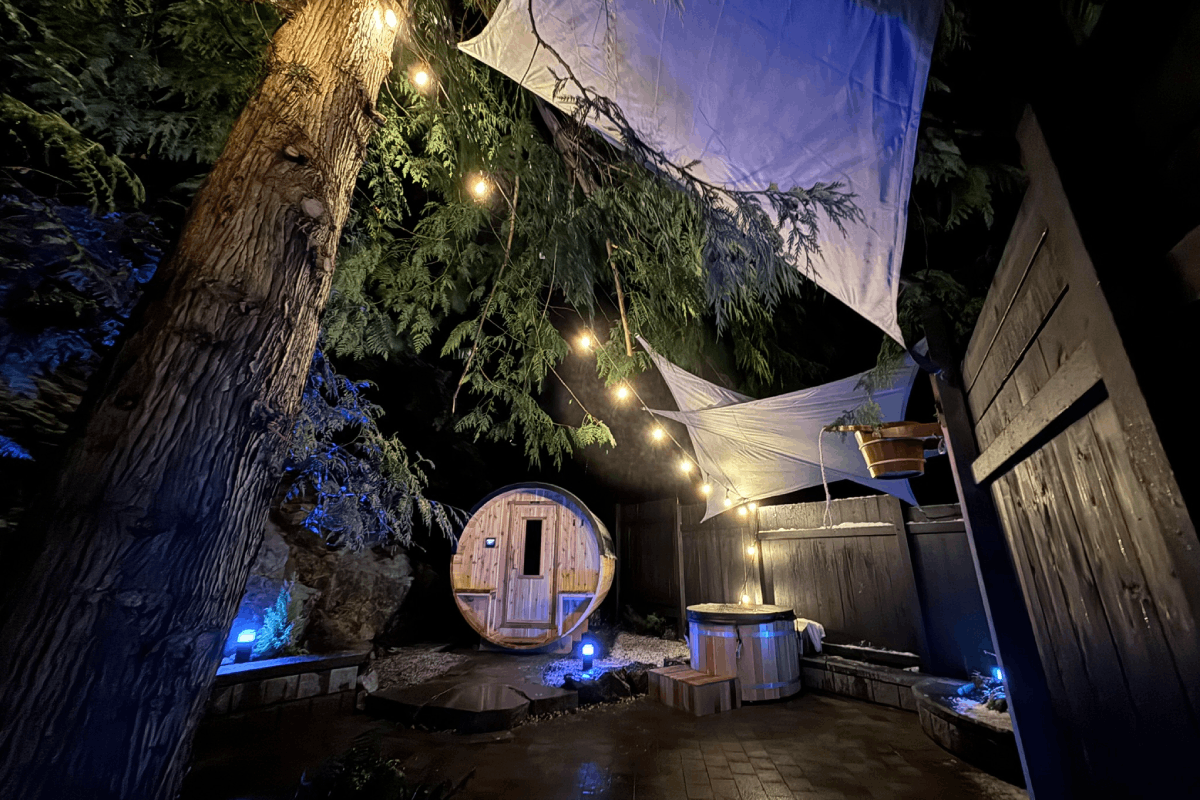
The Science of the Visual “Scene”: Beyond Aesthetics
The 2026 trend focuses on “Themed Circuits”—specific lighting environments designed to match the four elements. This isn’t just about mood; it is about Neuro-Visual Priming. When the eyes perceive specific color palettes, the brain signals the endocrine system to release corresponding hormones.
1. The “Fire” Scene: Infrared and High-Energy Red
In the heat phase, trending protocols use deep amber and red hues. Red light has been shown to support mitochondrial function and blood flow. When paired with the 80°C heat of a cedar sauna, the red light “primes” the skin for cellular repair and increases the release of growth hormones. This is the ultimate “power” state of the circuit.
2. The “Air” and “Water” Scenes: Cognitive Cooling
As the practitioner transitions to the cold, the lighting shifts to cool blues and soft turquoises. This visual cooling helps the brain process the “thermal shock” of the cold plunge more calmly. Blue light exposure is associated with lower blood pressure and a stabilized heart rate, allowing for a longer, more controlled immersion in the ice.
Atmospheric Restoration: The Cedarwood Color Palette
A major insight for 2026 is that the material of the sauna itself dictates the success of the lighting. Traditional Cedarwood possesses a natural, earthy color palette that acts as a perfect canvas for ambient light. The way light reflects off the rich grains of the wood creates a soft, diffused glow that minimizes “light pollution” and eye strain, leading to a deeper meditative state than clinical, white-walled recovery centers.
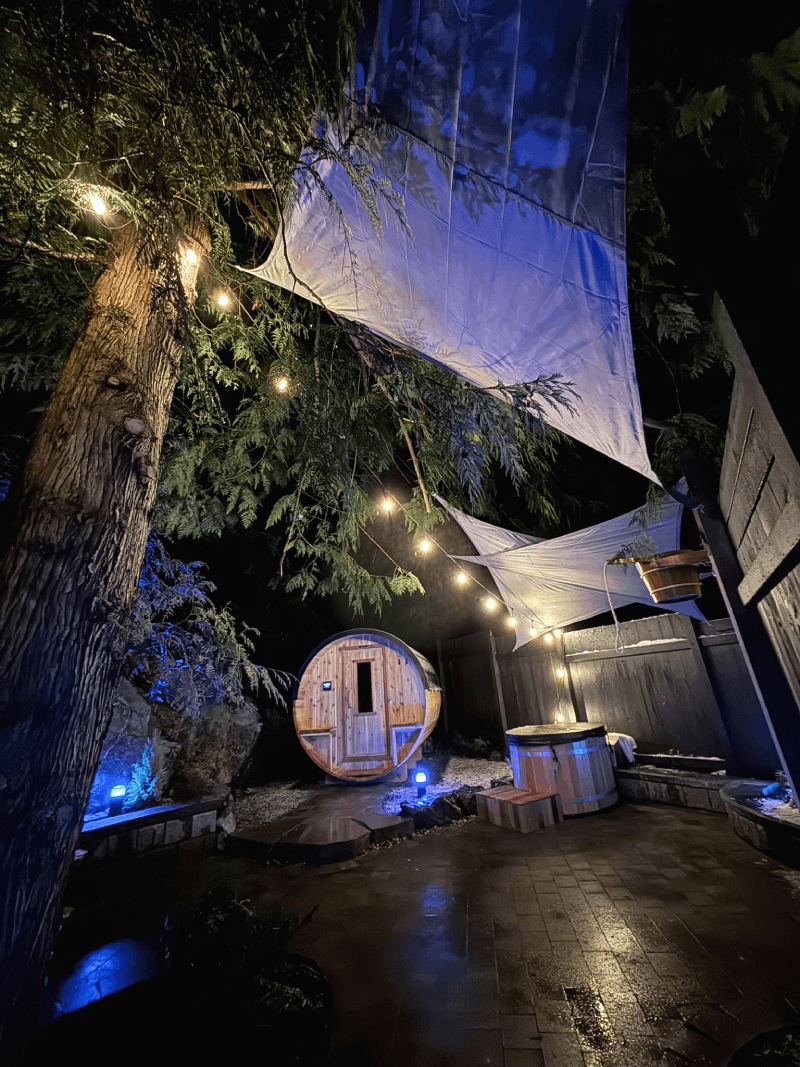
Elemental Immersion at The Barnfield Suites
While many city spas use generic LED strips, The Barnfield Suites on Bowen Island has pioneered the Elemental Scene Protocol. Their Cedarwood Elements circuit features custom-designed “Themed Scenes” based on the Four Elements. Each guest can choose an atmosphere—Fire, Water, Air, or Earth—that transforms the physical space through distinct color palettes and ambient intensities.
By tailoring the atmosphere to the guest’s specific goal—whether it be deep restoration (Earth) or high-performance focus (Fire)—The Barnfield Suites ensures that the visual environment works in synergy with the thermal stress. This level of sensory detail is where the future of contrast therapy lives: a place where the brain and body are harmonized through light and wood.
Frequently Asked Questions (FAQs)
Q: What is Chromotherapy in contrast therapy?
A: It is the use of specific colors of light to influence mood and physiological functions during your hot and cold cycles.
Q: Why is red light used in the sauna?
A: Red light supports cellular repair, increases circulation, and mimics the natural warmth of the sun, enhancing the “Fire” element of the circuit.
Q: Does blue light make the cold plunge feel colder?
A: Psychologically, blue light creates a calming effect that helps the brain “accept” the cold, making the physical shock feel more manageable.
Q: What is “Neuro-Visual Priming”?
A: It is the process of using environmental colors to prepare the brain for a specific physiological response, such as relaxation or alertness.
Q: How do the “Four Elements” scenes work?
A: Each scene uses a unique combination of light, temperature, and atmosphere to target different recovery goals—from deep rest to high energy.
Q: Can I change the lighting during my session?
A: In advanced circuits like those at The Barnfield Suites, lighting “scenes” are often pre-set to guide the guest through their chosen elemental journey.
Q: Why is cedarwood better for lighting than plastic or tile?
A: Cedar absorbs and diffuses light naturally, creating a soft, “organic” glow that is far more relaxing to the nervous system than the harsh reflections of tile or plastic.
Q: Does “The Shift” in lighting help with seasonal depression?
A: Yes, using full-spectrum and color-specific lighting can help regulate circadian rhythms and boost mood during darker months.
Q: What is “Atmospheric Optimization”?
A: It is the intentional design of every sensory detail—lighting, temperature, and material—to achieve a specific health outcome.
Q: Is green light used in contrast therapy?
A: Green light is often used in “Earth” scenes for its ability to reduce pain and provide a sense of grounding and safety.
Q: How does lighting affect Heart Rate Variability (HRV)?
A: Soft, warm lighting during the transition phases can help the heart rate stabilize faster, leading to a better HRV recovery score.
Q: What is a “Light-Scape”?
A: A light-scape is a curated environment where multiple layers of light work together to create a specific “vibe” or biological signal.
Q: Can light therapy help with sleep?
A: By using amber or red tones in the evening sessions, you avoid blue-light “wake” signals, helping the body prepare for melatonin production.
Q: Why is Bowen Island’s natural light important?
A: The natural light on Bowen Island is filtered by the forest and ocean, which complements the indoor “scenes” at The Barnfield Suites for a total bio-reset.
Q: Does the intensity of the light matter?
A: Yes, high-intensity “Fire” scenes are for activation, while low-intensity “Air” or “Water” scenes are for deep parasympathetic restoration.
Q: Is this trend scientifically validated?
A: Yes, the field of “Environmental Psychology” confirms that lighting significantly impacts cortisol levels and autonomic nervous system responses.
Q: Can I experience different scenes in one visit?
A: Many guests choose one element per circuit to ensure a focused physiological result, though some “multi-element” journeys are available.
Q: What is the most popular “Scene” at The Barnfield Suites?
A: While it varies, the “Earth” scene is highly sought after for its ability to provide deep grounding and stress relief through soft, forest-inspired hues.