
Modern life keeps the nervous system in a constant state of activation. Endless notifications, deadlines, urban noise, and cognitive overload prevent the brain and body from entering the restorative states required for healing, deep sleep, and emotional balance. Sauna therapy provides one of the most powerful and biologically proven tools to shift the nervous system out of stress and into recovery.
This is why sauna use is no longer seen as a luxury indulgence, but as a foundational practice for nervous system regulation, mental health support, and deep physiological recovery. When practiced intentionally — especially in quiet, nature-immersed environments — sauna therapy can help restore balance, improve sleep quality, reduce anxiety, and support long-term emotional resilience.
In this article, we explore how sauna heat interacts with the nervous system, why it improves stress and sleep, and how structured sauna rituals can transform both mental and physical health.
The Nervous System: Why Modern Life Keeps You Stuck in Stress Mode
The human nervous system operates through two primary branches:
- Sympathetic nervous system – responsible for alertness, stress response, and survival
- Parasympathetic nervous system – responsible for rest, recovery, digestion, and healing
In healthy conditions, the body moves fluidly between activation and recovery. However, modern environments disrupt this balance. Chronic stress keeps the sympathetic system overactive, preventing the body from entering the restorative parasympathetic state.
This leads to:
- Sleep disturbances
- Chronic fatigue
- Anxiety and emotional dysregulation
- Cognitive fog
- Reduced resilience to stress
Sauna therapy directly addresses this imbalance by activating physiological pathways that shift the nervous system into recovery mode.

How Sauna Heat Activates the Parasympathetic Nervous System
When the body enters a sauna, heat exposure triggers a series of neurological and cardiovascular responses designed to maintain internal balance.
These responses include:
- Vasodilation (expansion of blood vessels)
- Reduction in muscle tension
- Activation of calming neural pathways
- Release of relaxation-promoting neurotransmitters
Research published by the National Institutes of Health confirms that sauna bathing promotes autonomic nervous system balance, improving parasympathetic activation and reducing stress load.
https://www.ncbi.nlm.nih.gov/pmc/articles/PMC5941775/
This is why many individuals experience an immediate sense of calm within minutes of entering a sauna.
Sauna and Cortisol Reduction: Lowering the Body’s Primary Stress Hormone
Cortisol is the body’s primary stress hormone. While necessary in short bursts, chronic elevation leads to significant health consequences, including anxiety, sleep disruption, and accelerated aging.
Sauna therapy helps regulate cortisol by:
- Triggering relaxation pathways
- Improving nervous system balance
- Reducing physiological stress load
Studies show that regular sauna use can significantly reduce baseline cortisol levels over time.
https://www.frontiersin.org/articles/10.3389/fphys.2018.01062/full
Lower cortisol improves emotional stability, sleep quality, and overall mental wellbeing.

Sauna and Sleep: How Heat Improves Deep Rest
Sleep quality is deeply connected to nervous system state. When the sympathetic nervous system remains active, the body struggles to enter deep sleep cycles.
Sauna improves sleep through several mechanisms:
- Lowering cortisol
- Increasing parasympathetic activation
- Promoting thermoregulatory cooling after heat exposure
- Releasing relaxation-promoting neurotransmitters
After sauna use, the body naturally cools. This cooling process mimics the natural temperature drop required to initiate sleep.
Research confirms that passive heat exposure improves sleep quality and increases slow-wave sleep.
https://www.sleepfoundation.org/sleep-hygiene/sauna-before-bed
Neurochemical Benefits: Dopamine, Serotonin, and Mental Wellbeing
Sauna use stimulates the release of key neurotransmitters involved in emotional health and mental clarity.
These include:
- Dopamine – improves motivation and focus
- Serotonin – supports emotional balance
- Endorphins – promote calm and wellbeing
These neurochemical effects explain why sauna use often leads to improved mood and reduced anxiety.
Research demonstrates that sauna bathing is associated with lower risk of depression and improved mental health outcomes.
https://jamanetwork.com/journals/jamapsychiatry/fullarticle/2735465

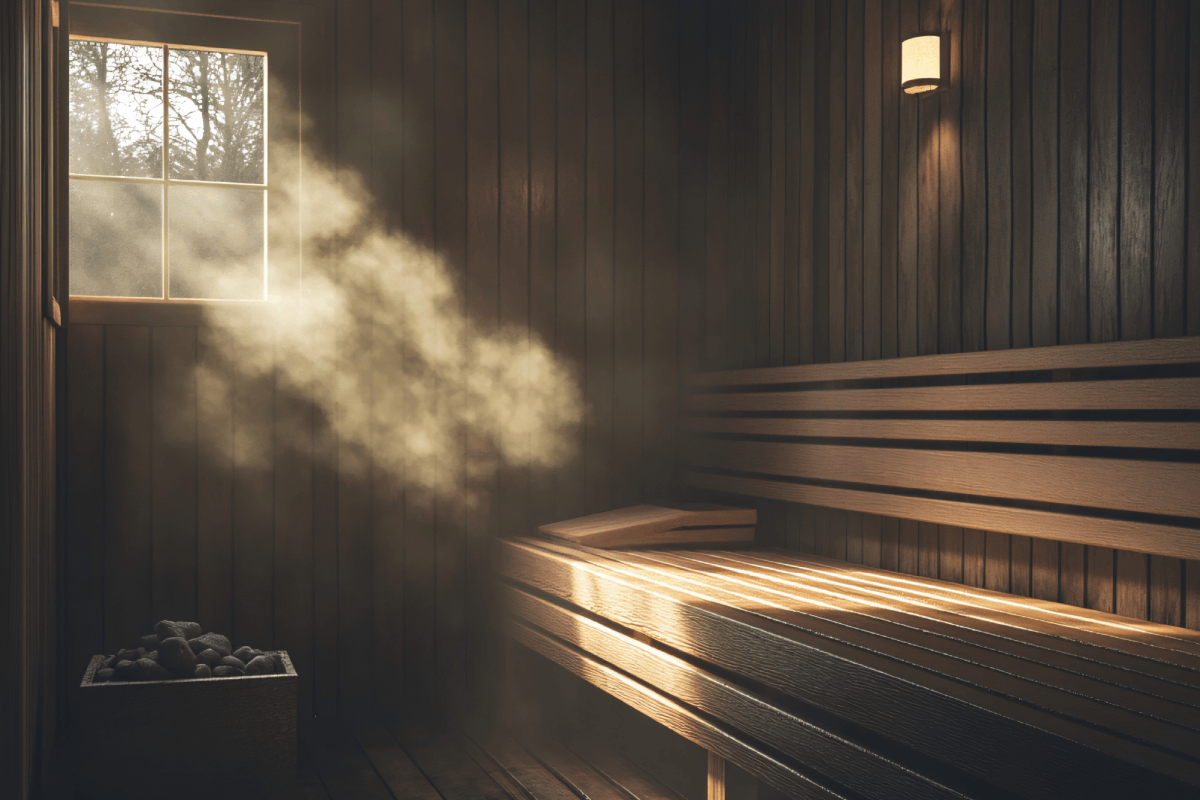
Why Sauna Works Especially Well in Quiet, Private Environments
The nervous system responds not only to temperature, but also to environmental context.
Private sauna environments enhance benefits by removing:
- Social stimulation
- Noise
- Performance pressure
- Environmental unpredictability
This allows the nervous system to fully relax.
Nature-immersed environments amplify these effects even further.
Exposure to natural environments has been shown to reduce stress hormones and improve nervous system balance.
https://www.frontiersin.org/articles/10.3389/fpsyg.2019.00722/full
Sauna and Anxiety Reduction
Heat exposure promotes physiological relaxation, which directly reduces anxiety symptoms.
Benefits include:
- Reduced muscle tension
- Improved breathing patterns
- Reduced sympathetic nervous system activity
- Improved emotional regulation
Regular sauna use helps retrain the nervous system to enter relaxed states more easily.
The Cumulative Effect: Why Regular Sauna Use Transforms Mental Health
Single sauna sessions provide immediate relaxation.
However, repeated sessions create long-term neurological adaptations, including:
- Improved stress resilience
- Better emotional regulation
- Improved sleep consistency
- Reduced baseline anxiety
This is why consistent sauna use produces lasting mental health benefits.
FAQ: Sauna for Stress, Sleep, and Mental Health
Q: Does sauna help reduce stress?
A: Yes. Sauna activates the parasympathetic nervous system, reduces cortisol levels, and promotes relaxation.
Q: Can sauna improve sleep quality?
A: Yes. Sauna improves thermoregulation, reduces stress hormones, and promotes deeper sleep cycles.
Q: How does sauna affect the nervous system?
A: Sauna shifts the nervous system from sympathetic (stress) to parasympathetic (recovery).
Q: Does sauna help anxiety?
A: Yes. Heat exposure reduces muscle tension, lowers cortisol, and promotes emotional regulation.
Q: How often should I use sauna for mental health benefits?
A: Two to four sessions per week provide optimal benefits.
Q: Can sauna improve depression symptoms?
A: Research shows sauna use is associated with improved mood and reduced depression risk.
Q: Does sauna increase dopamine?
A: Yes. Sauna stimulates dopamine release, improving motivation and focus.
Q: Can sauna calm the nervous system?
A: Yes. Sauna promotes parasympathetic activation and nervous system recovery.
Q: Is sauna good before sleep?
A: Yes. Sauna improves thermoregulation and sleep initiation.
Q: Can sauna reduce cortisol?
A: Yes. Regular sauna use helps regulate cortisol levels.
Q: Does sauna help burnout recovery?
A: Yes. Sauna supports nervous system reset and recovery.
Q: Is sauna safe for regular use?
A: Yes, when used properly and with adequate hydration.
Q: Can sauna improve emotional wellbeing?
A: Yes. Sauna improves neurotransmitter balance and emotional stability.
Q: Does sauna improve resilience to stress?
A: Yes. Repeated exposure improves nervous system adaptability.
Q: Is sauna good for nervous system healing?
A: Yes. Sauna promotes neurological recovery and balance.
Q: How long should sauna sessions be?
A: Typically 15–20 minutes per round.
Q: Does sauna help mental clarity?
A: Yes. Improved circulation and neurotransmitter balance enhance clarity.
Q: Why do I feel calm after sauna?
A: Sauna activates relaxation pathways and reduces stress hormones.
Conclusion: Heat as a Tool for Nervous System Healing
Sauna therapy is not simply relaxation. It is a powerful neurological intervention that restores nervous system balance, improves sleep, and enhances emotional wellbeing.
In environments designed for quiet, privacy, and intentional practice, sauna becomes one of the most effective tools available for mental and physiological recovery.
Heat teaches the nervous system how to relax again.
And when the nervous system recovers, everything improves — sleep, clarity, emotional stability, and resilience.