

The global sauna revival is not slowing down—but it is changing. What began as a resurgence of communal bathhouses and destination spas is quietly evolving into something more refined, more intentional, and more personal.
The future of sauna is not bigger. It is not louder. And it is not built around crowds or spectacle. Instead, the next chapter of sauna wellness is defined by four converging forces: smaller scale, private access, local integration, and science-led design.
This article explores where sauna culture is heading, why these shifts matter, and how forward-thinking wellness destinations like Cedarwood on Bowen Island are already aligned with the future of modern sauna.
Why Sauna Is Entering a New Era
Over the past decade, sauna has moved from cultural niche to mainstream wellness practice. Once associated primarily with Nordic traditions or athletic recovery, sauna is now embraced by biohackers, clinicians, mental health professionals, and longevity researchers.
Yet with popularity comes saturation. In many cities, sauna has become commercialized—crowded facilities, rigid time slots, social performance, and aesthetic-driven experiences that prioritize visuals over physiology.
The next evolution is a correction.
The future of sauna is responding to a more informed guest—one who understands nervous system regulation, recovery science, and the importance of environment. These guests are seeking depth over density.
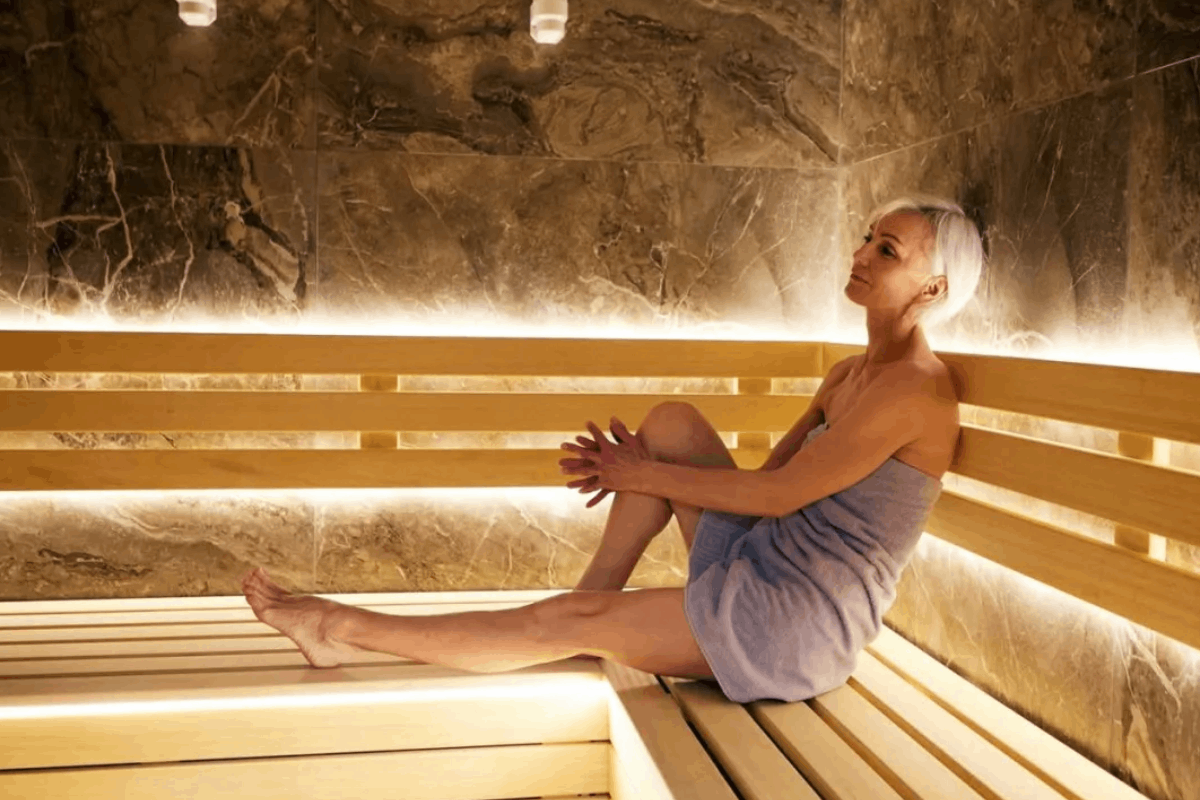
Trend 1: Smaller Saunas Over Mega Facilities
Large-scale bathhouses helped introduce sauna to broader audiences, but scale comes with tradeoffs. Noise, throughput pressure, and overstimulation can compromise the very benefits sauna is meant to provide.
Emerging research in environmental psychology suggests that smaller, quieter spaces improve parasympathetic activation and perceived restoration (Ref. 1).
As a result, the future of sauna favors:
- Compact, purpose-built sauna spaces
- Lower guest capacity
- Design that prioritizes acoustics, airflow, and heat consistency
Smaller saunas are easier to heat evenly, easier to personalize, and easier for the nervous system to interpret as safe.
Trend 2: The Shift Toward Private Sauna Experiences
Privacy is no longer a luxury add-on—it is becoming a baseline expectation for high-quality wellness experiences.
In a world of constant digital exposure and social visibility, private sauna sessions offer something rare: uninterrupted presence.
Private saunas support:
- Deeper relaxation without social vigilance
- Improved heart rate variability during heat exposure
- Greater emotional safety and introspection
Studies on stress recovery show that perceived privacy significantly enhances relaxation outcomes, even when physiological inputs remain constant (Ref. 2).
This is why private sauna near Vancouver searches are rising—and why destinations like Cedarwood are future-proof by design.
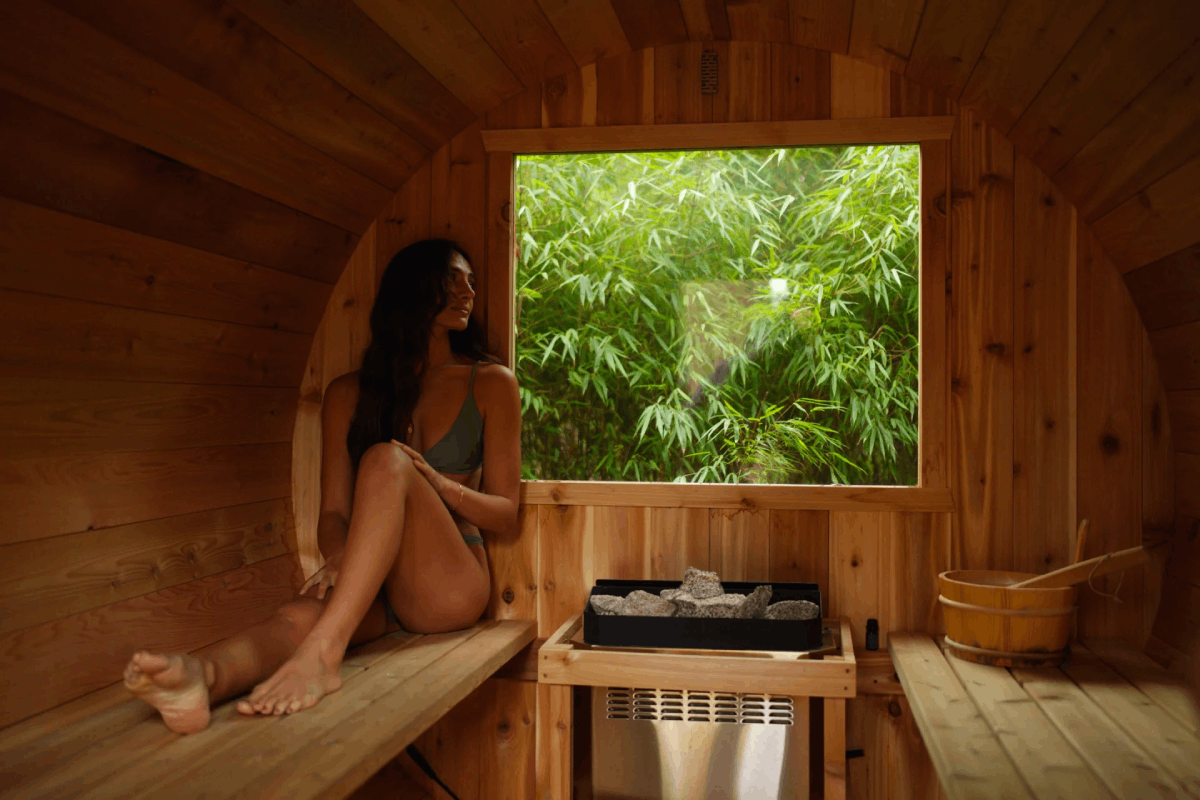
Trend 3: Local Wellness Over Destination Exhaustion
The era of wellness tourism defined by long-haul flights and packed itineraries is giving way to something quieter: local wellness retreats.
Post-pandemic travel behavior shows increased demand for short, repeatable escapes that minimize logistical stress while maximizing recovery (Ref. 3).
Sauna fits perfectly into this model. It does not require acclimatization, instruction, or novelty. It requires consistency.
Bowen Island exemplifies this trend. Close enough to Vancouver for a spontaneous reset, yet removed enough to create genuine psychological distance.
Trend 4: Science-Led Sauna Design
The future of sauna is evidence-based.
Wellness-literate guests are no longer satisfied with vague claims or aesthetic cues. They want to know:
- How hot is optimal?
- How long should sessions last?
- What physiological systems are being supported?
Research now links regular sauna use to improved cardiovascular health, reduced all-cause mortality, metabolic regulation, and cognitive resilience (Ref. 4, Ref. 5).
Forward-looking sauna spaces are being designed around this data—prioritizing consistent heat ranges, proper ventilation, and intentional session pacing.
Why Nervous System Health Is Driving Sauna’s Future
At the center of modern wellness is the nervous system.
Chronic stress, screen exposure, and urban living keep many people locked in sympathetic dominance—the “fight or flight” state.
Sauna offers a powerful counterbalance by activating heat shock proteins and stimulating parasympathetic rebound during recovery phases (Ref. 6).
However, this effect is environment-dependent. Overstimulating sauna environments can blunt or delay nervous system benefits.
This is why smaller, private, and quieter saunas are not just preferences—they are physiologically superior.
Cedarwood as a Case Study in Future Sauna Design
Cedarwood was not built to follow trends—it was built around principles that trends are now validating.
Its approach reflects the future of sauna:
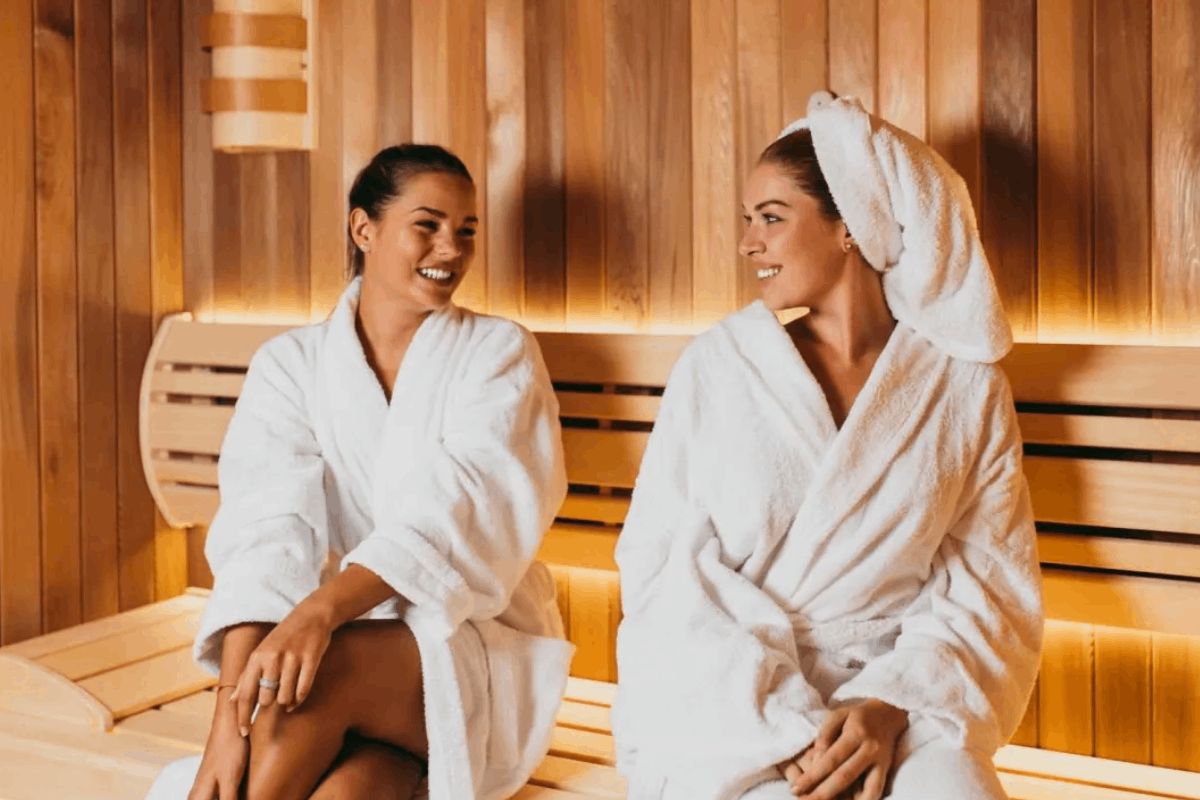
- Private sessions rather than communal throughput
- Local access rather than destination fatigue
- Science-informed pacing rather than arbitrary schedules
- Design that supports down-regulation, not stimulation
For guests staying at The Barnfield Suites, sauna becomes part of a rhythm rather than an event—an experience that compounds over time.
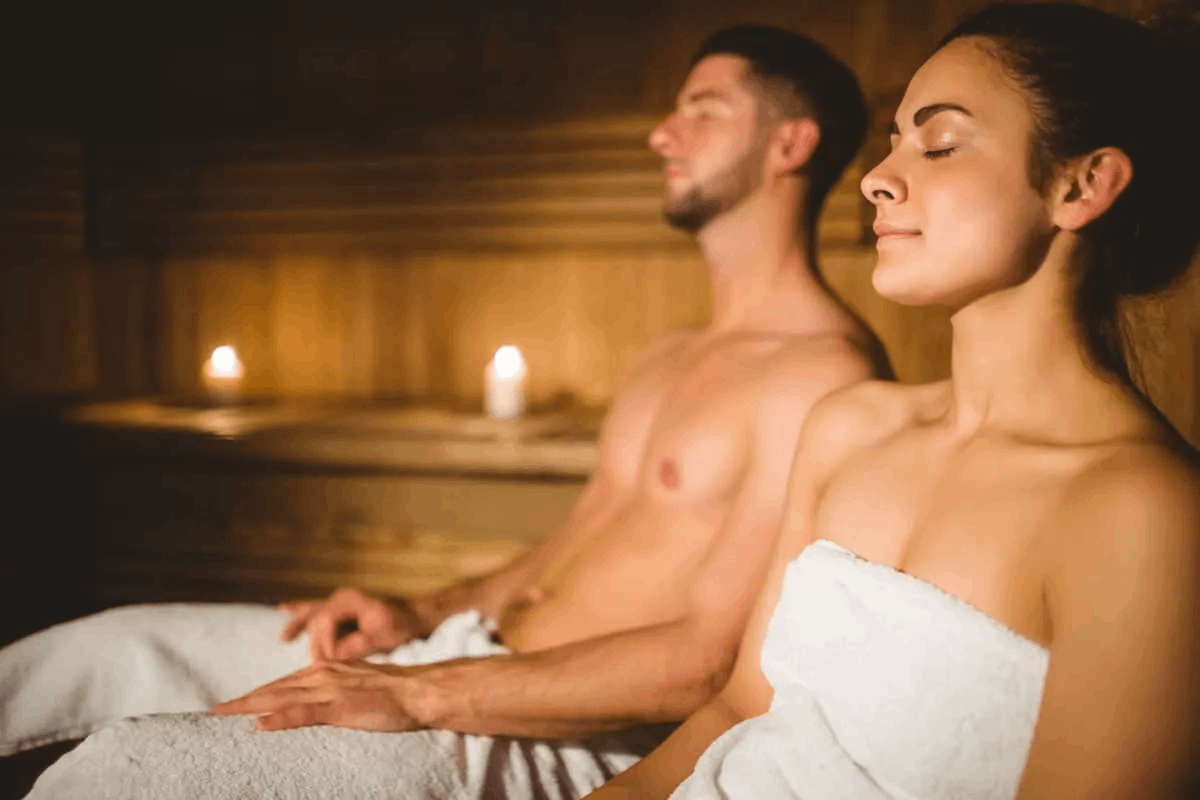
The Role of Staycations in Sauna’s Next Chapter
Staycations are no longer a compromise—they are a strategy.
Short, repeated wellness exposures outperform infrequent, high-intensity retreats when it comes to nervous system recovery and habit formation (Ref. 7).
Sauna aligns naturally with this model. When paired with quality sleep, quiet surroundings, and reduced stimulation, its benefits deepen.
This is why local sauna retreats near Vancouver are gaining momentum.
Technology Without Over-Optimization
The future of sauna is not anti-technology—but it is selective.
Data-informed design (temperature stability, air quality, energy efficiency) is replacing wearable-driven performance chasing.
The most effective sauna environments minimize cognitive load rather than add to it.
What Sauna Will Not Be in the Future
Understanding where sauna is going also requires clarity on what it is moving away from.
- Overcrowded, high-turnover facilities
- Performative wellness aesthetics
- One-size-fits-all protocols
- Noise-heavy social environments
The future values restoration over stimulation.
Who the Future of Sauna Is For
This evolution serves a specific audience:
- Professionals seeking nervous system recovery
- Couples prioritizing shared, intentional time
- Health-conscious individuals focused on longevity
- Guests who value science and subtlety
These guests are not looking for trends—they are looking for outcomes.
Frequently Asked Questions
Q. What is the future of sauna?
A: The future of sauna emphasizes smaller, private, local, and science-led experiences.
Q. Why are private saunas becoming more popular?
A: Private saunas offer better nervous system regulation and reduced stimulation.
Q. Are large public bathhouses declining?
A: They remain popular, but many guests are seeking quieter alternatives.
Q. Is sauna backed by science?
A: Yes, extensive research supports cardiovascular, metabolic, and longevity benefits.
Q. How does sauna support mental health?
A: Sauna helps reduce stress hormones and promotes parasympathetic activation.
Q. What role does location play in sauna effectiveness?
A: Natural, quiet environments enhance recovery outcomes.
Q. Are local wellness retreats increasing?
A: Yes, especially near urban centers like Vancouver.
Q. What temperatures are optimal for sauna?
A: Most research supports 70–90°C for therapeutic benefit.
Q. How often should sauna be used?
A: Regular use, 3–4 times per week, shows the strongest benefits.
Q. Does sauna improve sleep?
A: Many users experience deeper and more restorative sleep.
Q. Is sauna safe long-term?
A: For most healthy individuals, sauna is safe when used responsibly.
Q. What is science-led sauna design?
A: Design informed by physiological research rather than aesthetics alone.
Q. Are saunas becoming more private?
A: Yes, privacy is a growing priority in premium wellness.
Q. How does sauna compare to other wellness therapies?
A: Sauna uniquely combines physical, cardiovascular, and nervous system benefits.
Q. Is sauna part of longevity research?
A: Yes, studies link sauna use with reduced mortality risk.
Q. Will sauna remain relevant?
A: Its adaptability and evidence base suggest long-term relevance.
Q. How does sauna fit into modern lifestyles?
A: Short, consistent sessions integrate well into local routines.
Q. Why is Cedarwood aligned with sauna’s future?
A: Its private, science-led, and local approach reflects emerging best practices.
References
1. Ulrich et al., Stress recovery during exposure to natural environments
, Journal of Environmental Psychology.
2. Evans & Cohen, Environmental stress and perceived privacy
, Psychological Science.
3. McKinsey & Company, Wellness travel trends post-pandemic
.
4. Laukkanen et al., Sauna bathing and cardiovascular health
, JAMA Internal Medicine.
5. Hussain & Cohen, Clinical effects of sauna bathing
, Evidence-Based Complementary Medicine.
6. Kihara et al., Heat therapy and autonomic nervous system balance
, Circulation Journal.
7. Kelly McGonigal, The Upside of Stress
, Stanford Health.